
Last updated November 25, 2026
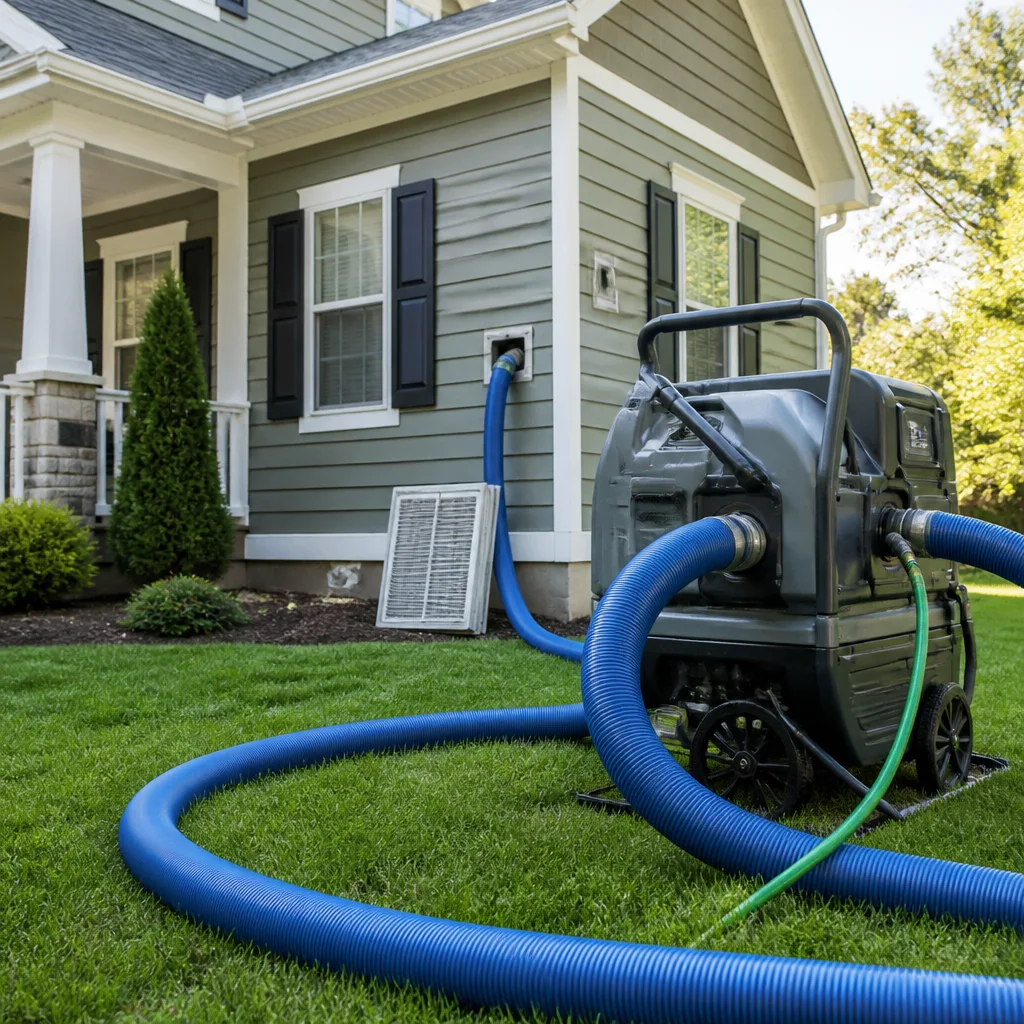 Whole-home duct cleaning
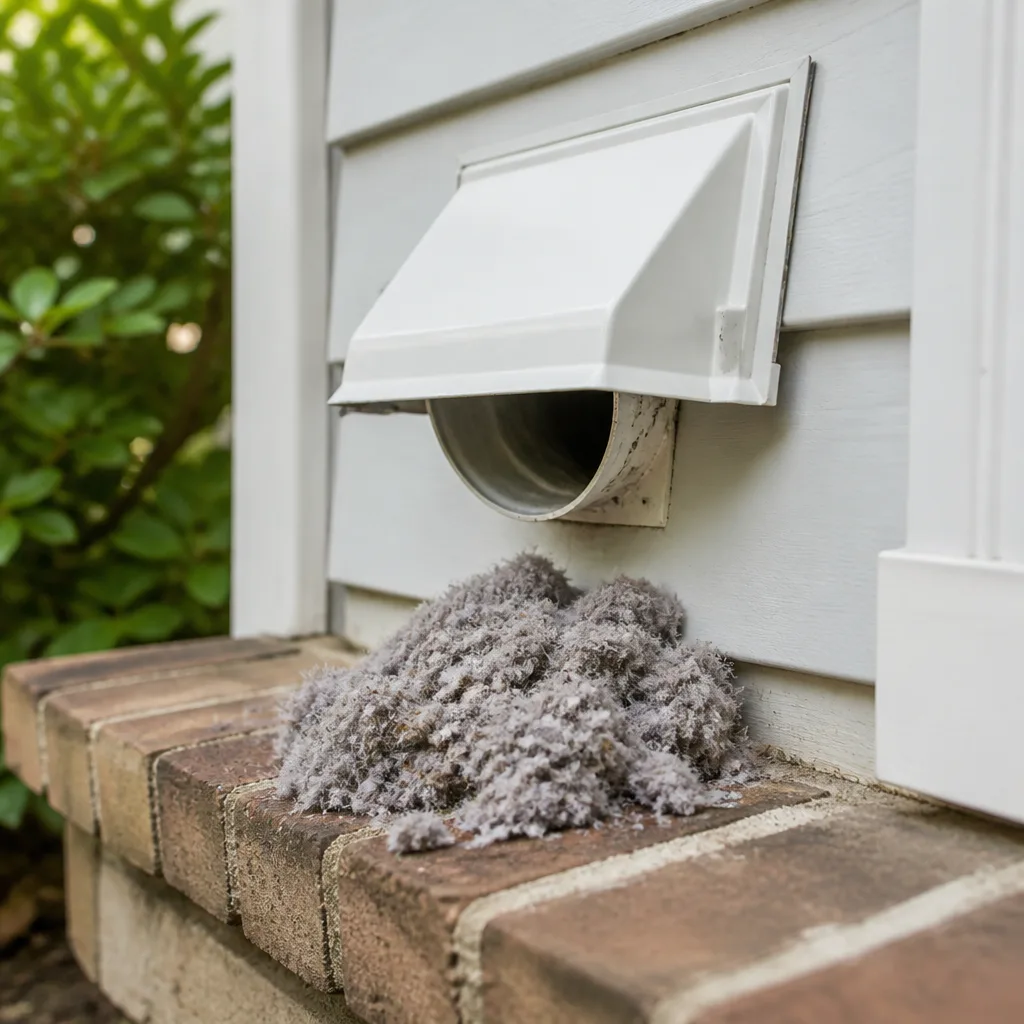 Dryer vent cleaning
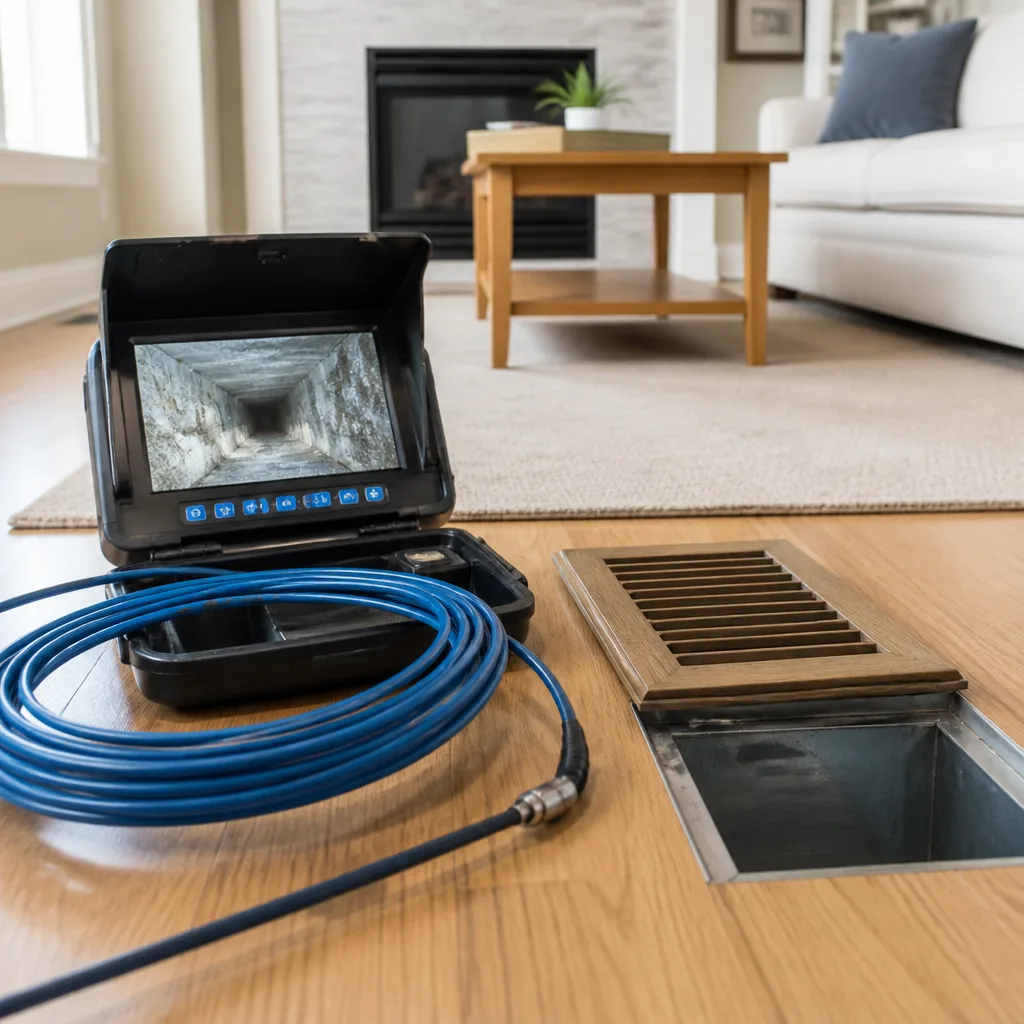 Camera inspection
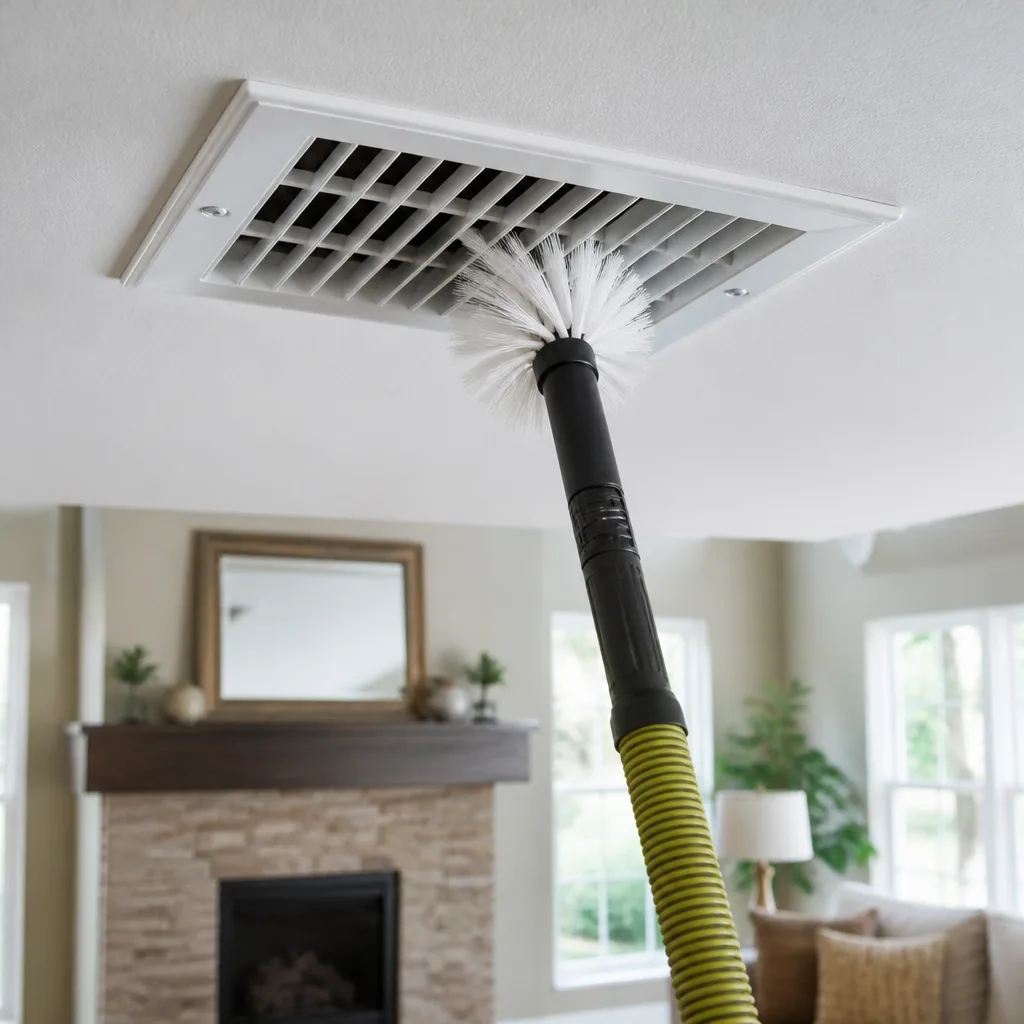 Sanitizing & deodorizing
Whole-system duct and dryer vent check with before-and-after photos - you see exactly what came out of your vents
That "$99 whole-house special" is a bait ad - the real number appears once they are in your hallway, or the "clean" is a shop-vac at the register. We photograph the inside of your ducts before and after instead.
Choosing the Right Air Duct Cleaning Brand: A Buyer’s Guide for Edmonds
Rotobrush, Nikro, Abatement Technologies, and Ram-Air aren’t names most homeowners have heard. They should be. Those names, stamped on the equipment sitting in a contractor’s van or mounted on a truck, separate a company that can actually pull debris out of a duct system from one that moves dust around with a glorified shop vac. Here in Edmonds, where dozens of older homes sit on crawlspaces and tight attic runs, that distinction decides whether the air you breathe gets cleaner or just gets stirred. This guide walks you through the equipment categories that matter, the brands worth recognizing, and the questions that expose a contractor who rents instead of owns. You’ll finish knowing how to read a quote the way a technician reads a duct system.
Quick Answer
A legitimate duct cleaning contractor uses three equipment categories on a real job: negative-pressure extraction (truck-mounted or high-CFM portable), contact agitation tools like rotary brushes or air whips, and inspection gear such as a camera scope. In Edmonds, truck-mounted systems from Ram-Air or Pullman Ermator handle most residential jobs best, while a high-CFM portable from Nikro or Abatement Technologies fits tighter access and contamination scenarios. Ask any contractor to name their equipment and show it before work starts.
Styles & brands we work with
- Whole-home duct cleaning
- Dryer vent cleaning
- Camera inspection
- Sanitizing & deodorizing
Table of Contents
- The Three Equipment Categories Every Job Requires
- Truck-Mounted vs. Portable: Which Fits an Edmonds Home
- Agitation Tools by Duct Material: Why the Wrong Brush Destroys a System
- Sanitizing and Sealing Products: What Credibility Looks Like
- How to Verify a Contractor Actually Owns the Equipment
- Eight Questions to Ask Before You Book
- Why Cleaning Without Repair and Sealing Is Incomplete
- Edmonds Housing, Climate, and What It Means for Your Ducts
The Three Equipment Categories Every Job Requires
Source removal is the only standard that counts in this trade. That means pulling contaminants out of the system and capturing them, not knocking them loose to settle elsewhere in the house. Reaching that standard requires three distinct tool categories working together, and a contractor missing any one of them is either improvising or skipping steps.
The first category is negative pressure extraction. This is the vacuum system, and its job is to keep the whole duct network under constant suction while work happens so dislodged debris travels toward the collection point instead of into living space. Truck-mounted units from brands like Ram-Air, Vac-Man, and Pullman Ermator generate far higher CFM and static pressure than portable machines. High-CFM portables from Nikro and Abatement Technologies are the credible alternative when truck access isn’t possible.
The second category is contact agitation. Vacuum alone won’t strip caked dust from duct walls. The system needs physical disruption, done with rotary brush systems, air whips, or skipper balls. Which tool is appropriate depends entirely on duct material and construction, and choosing wrong causes real damage.
The third category is inspection technology. A camera scope lets a technician see conditions before cleaning and verify results afterward. Without one, a contractor is guessing about what’s inside your system and asking you to take their word for what changed.
Every job, every time, all three categories. If the quote doesn’t account for them, the price is telling you something.
Truck-Mounted vs. Portable: Which Fits an Edmonds Home
For most residential work in Edmonds, a truck-mounted extraction system is the right tool. The reason is physics, not marketing. A truck-mounted unit delivers several times the airflow and vacuum pressure of a portable machine, which creates stronger negative pressure throughout the entire duct network. That’s what makes true source removal possible in a typical house with a full basement or crawlspace system.
Pullman Ermator and Ram-Air are the names you’ll see mounted on legitimate rigs. Vac-Man systems also show up in professional fleets. What these share is continuous heavy-duty operation, large collection tanks, and hoses sized to move serious air volume.
Portables aren’t inferior tools, they’re different tools. High-CFM Nikro and Abatement Technologies units earn their place in specific conditions:
- No truck access. Some Edmonds properties have driveways or alley approaches that won’t fit a truck hose run, especially in the older blocks near downtown where lots are tight.
- Multi-unit and commercial buildings. Upper-floor condos and commercial suites often need equipment carried in rather than parked outside.
- Contamination scenarios. Abatement Technologies equipment is built for remediation-level conditions such as mold, allergen loads, or heavy construction dust, where containment matters as much as suction.
- Supplemental work. A portable can support a second work zone while the main truck unit handles the primary system.
The takeaway: a contractor with only a portable isn’t automatically out of the running, but they should be able to tell you exactly why a portable fits your home. If the answer is “it’s what we have,” keep looking.
Agitation Tools by Duct Material: Why the Wrong Brush Destroys a System
This is where equipment knowledge stops being trivia and starts protecting your house. Duct systems in Edmonds are a mix of materials depending on when the home was built and whether it’s been retrofitted. Rigid galvanized sheet metal, fiberglass-lined duct board, and flexible plastic-core flex duct all require different treatment.
A rotary brush system that’s ideal for rigid sheet metal will shred a fiberglass liner, sending glass fibers into the airstream. The same brush in a flex duct can catch, twist, and collapse the run entirely. Air whips and skipper balls exist partly because they handle flex and lined ducts without the mechanical aggression of a stiff brush head.
Before any agitation begins, a capable contractor inspects and identifies what they’re working with. That’s part of why the camera scope matters. Here’s the material-by-material picture:
- Rigid sheet metal: rotary brush systems work well, paired with negative pressure to capture what comes loose.
- Fiberglass-lined duct board: gentler agitation only, often air whips, with attention to liner condition. Deteriorated liner may need repair or replacement rather than cleaning.
- Flex duct: low-aggression tools, short runs, careful control of pressure. Some heavily soiled flex runs are better replaced than cleaned.
- Transition zones and plenums: hand tools and targeted agitation where machine heads won’t fit.
Ask any contractor how they adjust agitation for your duct material. A specific answer tells you they’ve thought about it. A vague one tells you they haven’t.
Sanitizing and Sealing Products: What Credibility Looks Like
Two product categories sit downstream of cleaning, and both are full of claims that range from well-founded to invented. Understanding the difference protects your wallet and your indoor air.
Antimicrobial sanitizers. Any product applied inside a duct system as a sanitizer or antimicrobial must carry EPA registration for that use. That registration means the EPA reviewed the product’s efficacy and safety data for the application. Unregistered products sold as “duct sanitizers” don’t meet that bar, and a contractor who can’t produce an EPA registration number for what they’re spraying is using something the regulator hasn’t signed off on. Ask before they apply anything.
Sealing products. Brush-applied sealants handle small gaps at accessible joints. Aeroseal is a different category. It’s an aerosol-applied sealant distributed through the duct system under controlled conditions, and its performance data has been independently verified by Lawrence Berkeley National Laboratory. That’s an outside measurement, not a manufacturer claim, and it’s why Aeroseal sits apart from the sealants a technician brushes on by hand.
We work with Honeywell and Aprilaire filtration and air quality products, and with Guardsman on the sealing and protection side, because filtration upgrades address the source of contamination rather than just cleaning around it. A Honeywell or Aprilaire filter upgrade often matters more for long-term air quality than any single cleaning visit. Focusing on the equipment chain from extraction through filtration is what a full-system approach looks like.
How to Verify a Contractor Actually Owns the Equipment
Rented equipment happens in this trade more than homeowners realize. A crew can rent a truck-mounted unit for a week, knock out several jobs, and present themselves as a full-capability operation. The job might even go fine. But rented equipment rarely comes with the operator training and maintenance attention that owned gear does, and it says nothing about whether the contractor can handle the next job.
Verification isn’t confrontational. It’s normal, and legitimate contractors expect it. Here’s how to check:
- Ask for a walk-around. Request to see the truck-mounted system before work starts. A legitimate contractor will show you the unit, the collection tank, and the hose setup without hesitation.
- Look at the branding. Ram-Air, Pullman Ermator, Nikro, and Abatement Technologies all put visible branding on their equipment. Unbranded or consumer-branded units deserve a question.
- Watch the setup. A real setup includes a collection tank, negative-pressure hose run to the main trunk, and sealed registers elsewhere. A single shop-vac with flex hose is not that.
- Ask about maintenance records. Owned equipment gets serviced. Rented gear gets returned.
- Check the camera scope. Ask to see before-and-after footage of your own ducts. If a contractor can’t produce it, you can’t verify the work was actually done.
Our technicians have up to 12 years of experience, and that shows up in how equipment is maintained and operated. It also shows up in being able to answer these questions directly. A contractor who talks around them has told you something useful.
Eight Questions to Ask Before You Book
Bring this list to your next call. Each question has a purpose: it either confirms capability or flags a gap. You don’t need a perfect answer to every one, but you should get specific answers, and the pattern will tell you who you’re dealing with.
- What extraction equipment do you use? Looking for a named system (Ram-Air, Pullman Ermator, Nikro) and whether it’s truck-mounted or portable for your home.
- How do you agitate the ducts? Rotary brush, air whip, or skipper ball, and how they match it to your duct material.
- Do you use a camera scope? Before and after. If they don’t scope, you can’t verify the work.
- How do you handle duct repair and sealing? Cleaning around a leak isn’t fixing it. Ask whether they can repair, seal, or recommend filtration upgrades.
- Are you EPA-registered for any sanitizer you use? A real product has a registration number.
- Is the price flat per system or per vent? Flat per-system pricing, agreed in writing, protects you from the low-coupon-then-huge-invoice routine.
- Can I see the system before work starts? A walk-around of the truck unit and collection tank is a reasonable request.
- Will I get before-and-after photos of my own ducts? Not stock images. Yours.
If you’re also thinking about the fire-safety side of the system, ask whether they handle dryer vent cleaning in the same visit. A contractor covering both areas is set up for the whole chain.
Why Cleaning Without Repair and Sealing Is Incomplete
Cleaning a duct system that leaks is a partial job. Every gap at a joint, every disconnected run, every cracked plenum pulls unfiltered air and whatever’s in your crawlspace or wall cavity directly into the supply airstream. You paid for cleaner air; you got cleaner ducts feeding a leaky system that refills them.
That’s why a full-system approach covers four steps: assess, clean, restore, and protect.
- Assess. Inspect the system with a camera scope and identify material, condition, leaks, and contamination level.
- Clean. Negative-pressure extraction plus material-appropriate agitation to reach source removal.
- Restore. Repair and reseal gaps, disconnected runs, and deteriorated connections so the system holds pressure.
- Protect. Recommend filtration upgrades (Honeywell, Aprilaire) or sealing solutions that keep the system clean longer.
This is the same standard for HVAC cleaning, where the air handler, coils, and blower get evaluated as part of the system rather than treated as an afterthought. A technician who assesses and fixes the whole system is worth more than one who vacuums vents and leaves. The clearest way to see that difference is in what a written estimate includes. Ours covers one flat price per system agreed before work starts, before-and-after photos of your own ducts, and a satisfaction guarantee on the work.
Edmonds Housing, Climate, and What It Means for Your Ducts
Edmonds has a specific duct-cleaning picture, and it comes down to housing stock and climate. Homes from the mid-century through the 1990s dominate the residential blocks, and that means a mix of rigid sheet metal in older builds and fiberglass-lined duct board or flex in later ones. Crawlspaces are common, and systems running through them collect a different kind of dust than systems in a warm interior.
Our climate is wet and mild for most of the year, which is relevant to indoor air. Moisture in the crawlspace, damp exterior air pulled through unsealed returns, and long stretches of reduced ventilation all push contaminant loads toward the higher end. Homes near the Edmonds waterfront face different moisture dynamics than properties up on the higher ground near Yost Park or out toward Perrinville, but the general rule holds: unsealed systems take in more than they should.
That makes sealing and repair more than a nice-to-have in Edmonds. It also means the contractor you choose should be able to look at your whole system, in its actual location, and explain what they’re seeing. The full picture matters here more than in drier, newer housing markets. That’s the reasoning behind the full-spectrum indoor air quality approach in our air duct cleaning work, and it’s why we treat assessment and repair as the frame around cleaning rather than an upsell.
Common Mistakes to Avoid
- Booking on price alone. A low per-vent quote often means a smaller crew, less-capable equipment, and a surprise total once the technician is on site. Ask for a flat price per system in writing before you book.
- Skipping the equipment walk-around. If a contractor resists showing the truck or portable unit, that’s information. Legitimate operators show their gear without being asked twice.
- Accepting “before-and-after” images you can’t verify. Ask for photos or video of your own ducts, not stock images. No proof, no payment.
- Cleaning without sealing in a damp climate. In Edmonds, a clean system that leaks refills fast. Repair and sealing should be evaluated on the same visit.
- Buying a sanitizer with no EPA registration number. If they can’t show the registration, they can’t show the product is approved for duct interiors.
- Overlooking the dryer vent. Dryer vents are a fire-safety issue first and an energy issue second. Ask whether the contractor covers them, since many pure duct cleaners don’t.
- Ignoring the system diagram. Ask to see the duct layout identified before work starts. A crew that can’t map the system can’t clean all of it.
See the difference
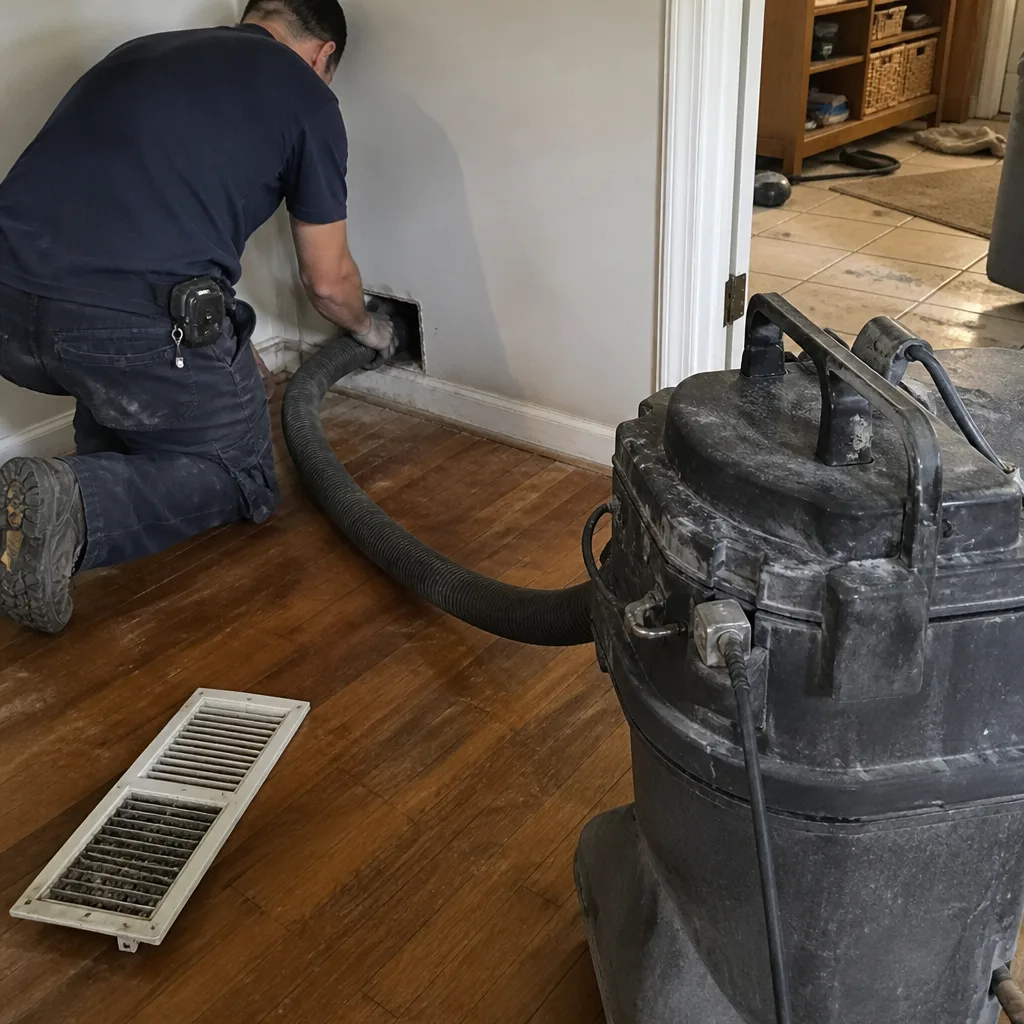 Before
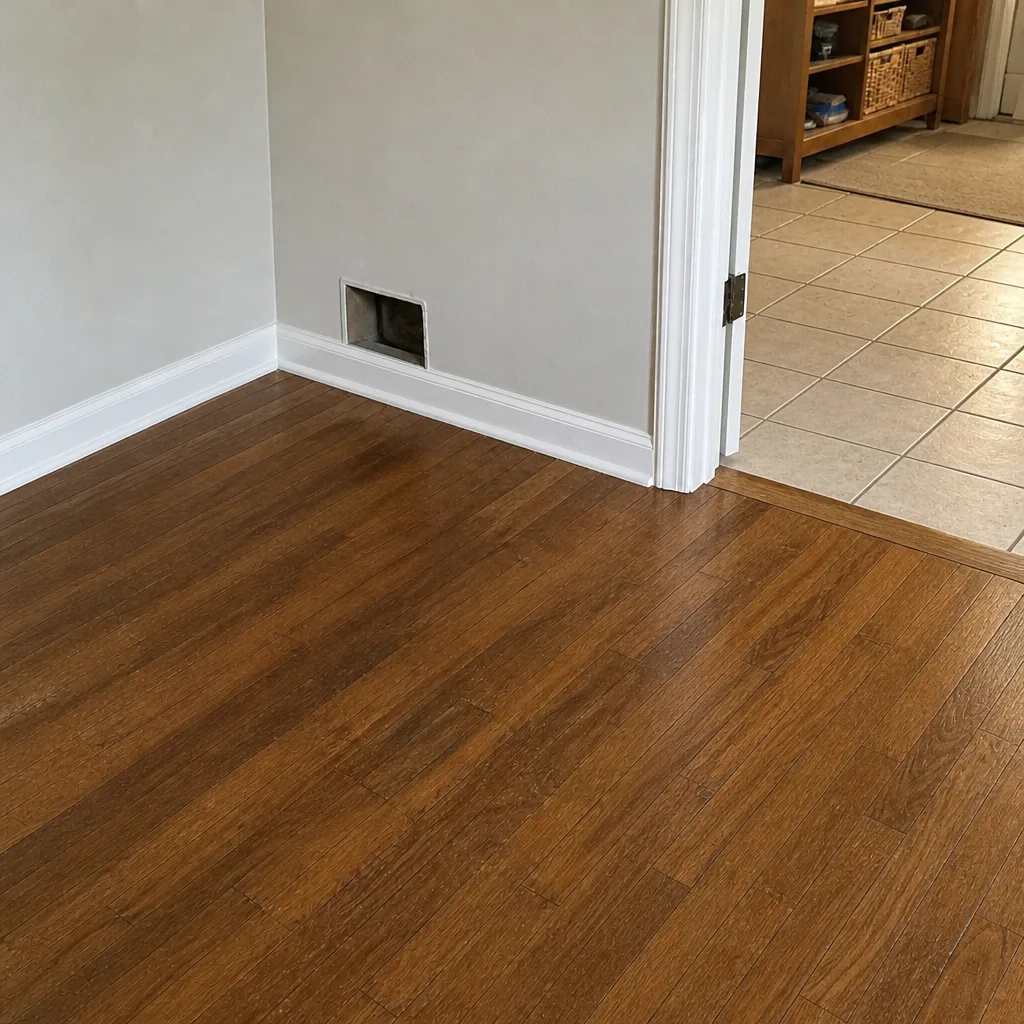 After
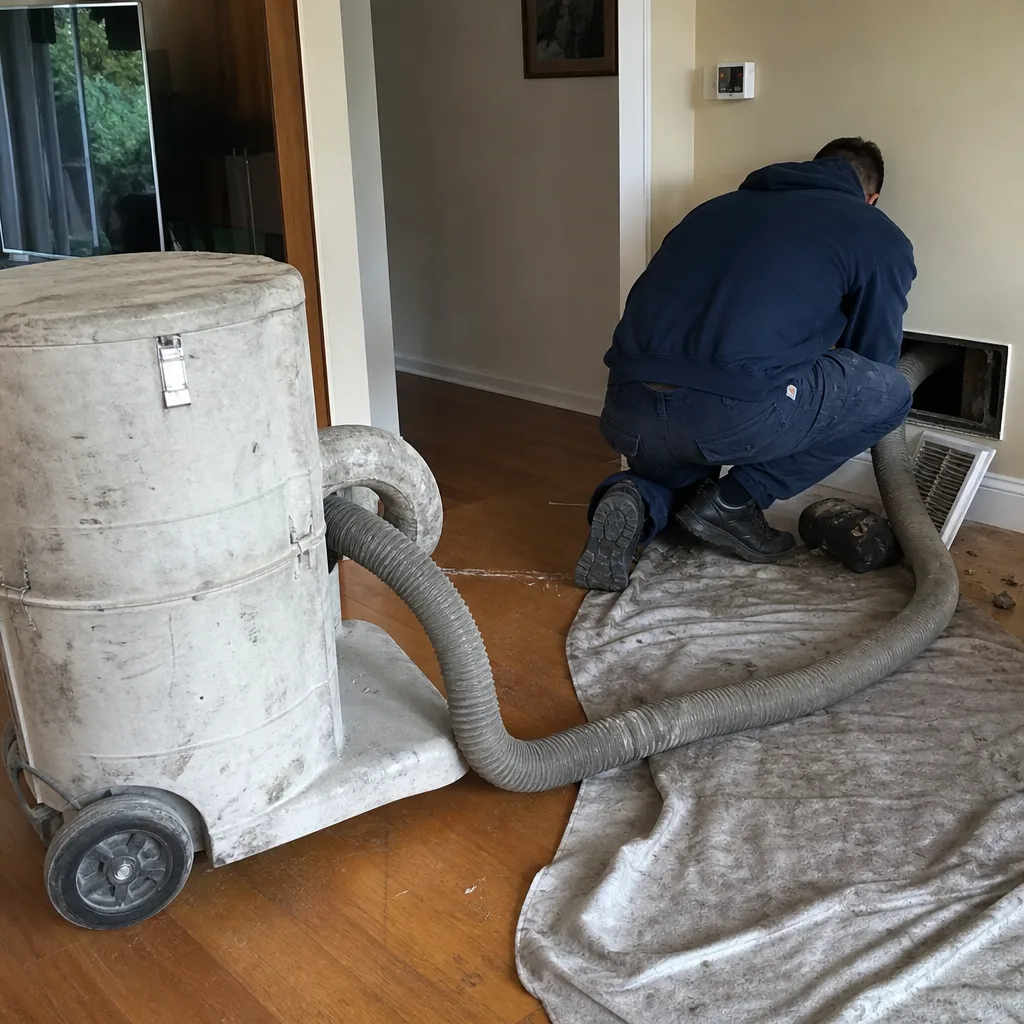 Before
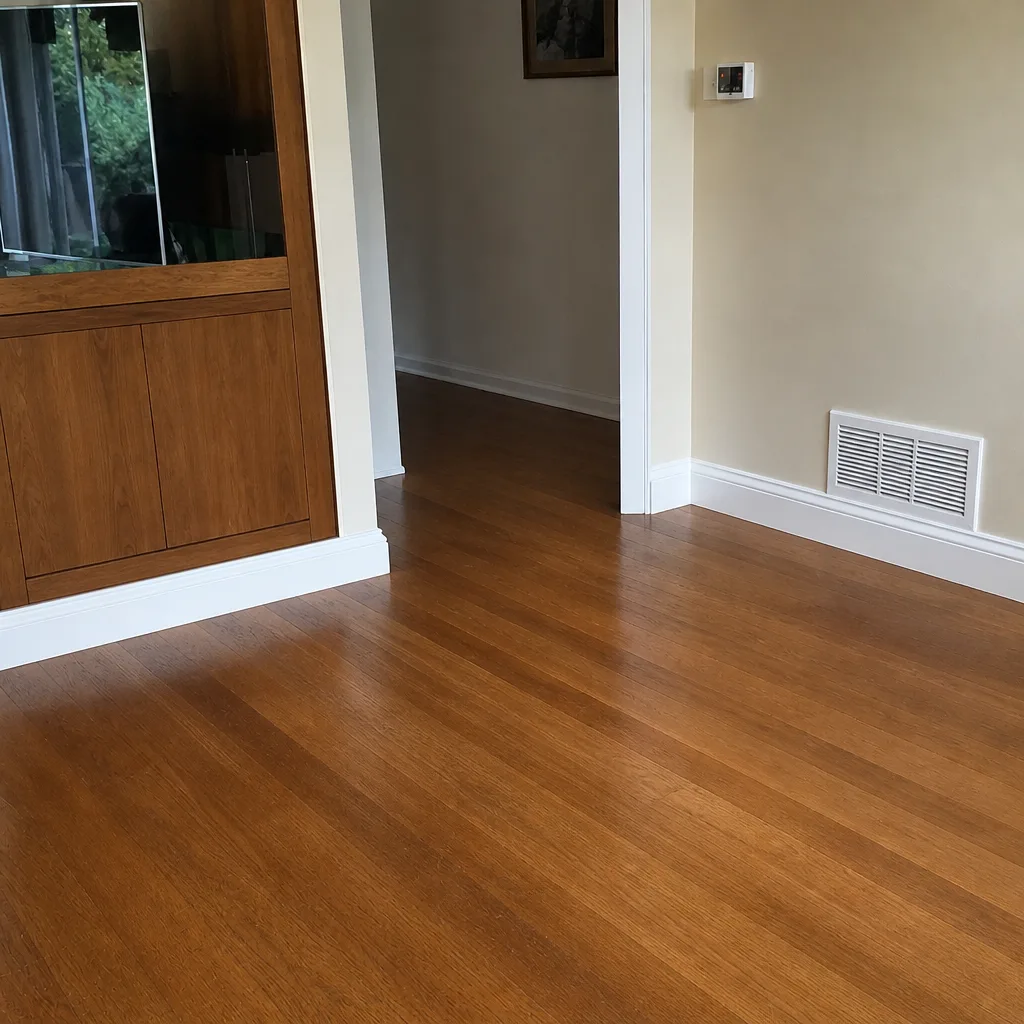 After
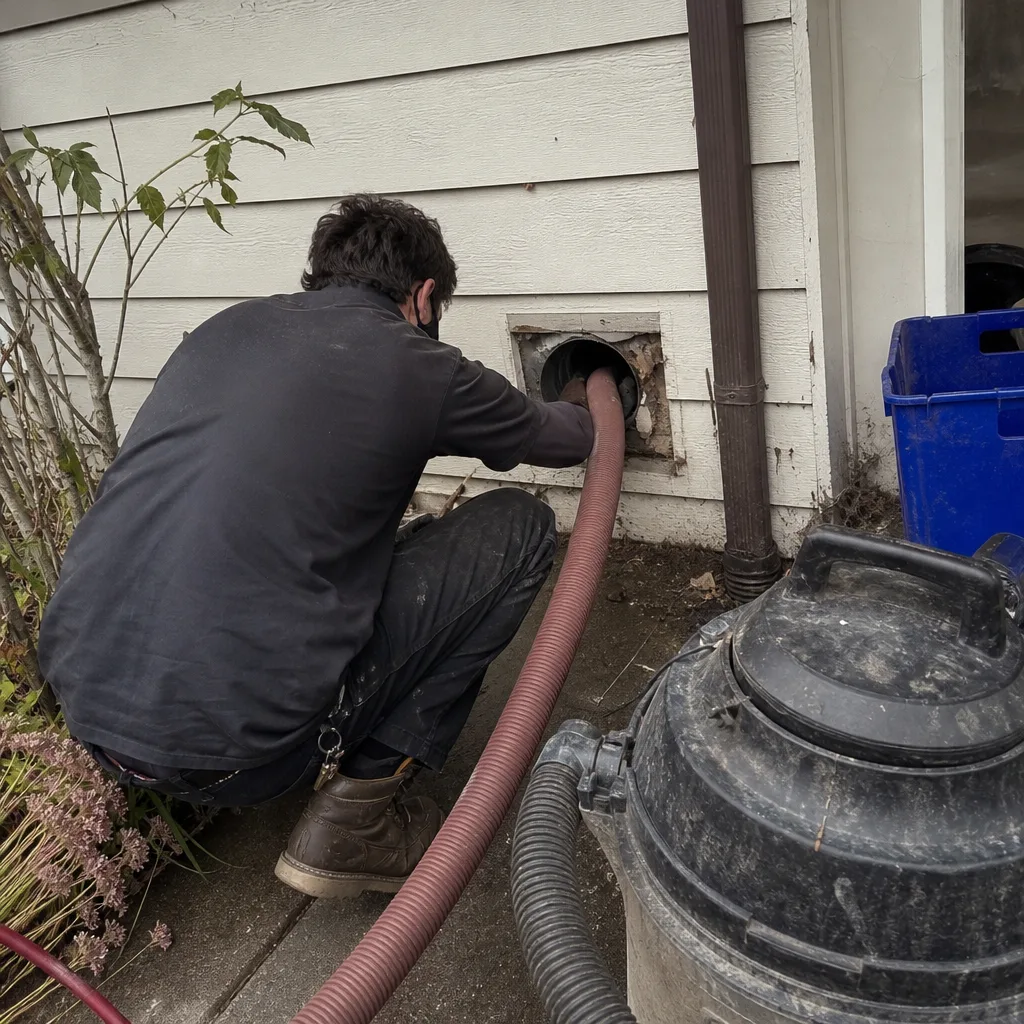 Before
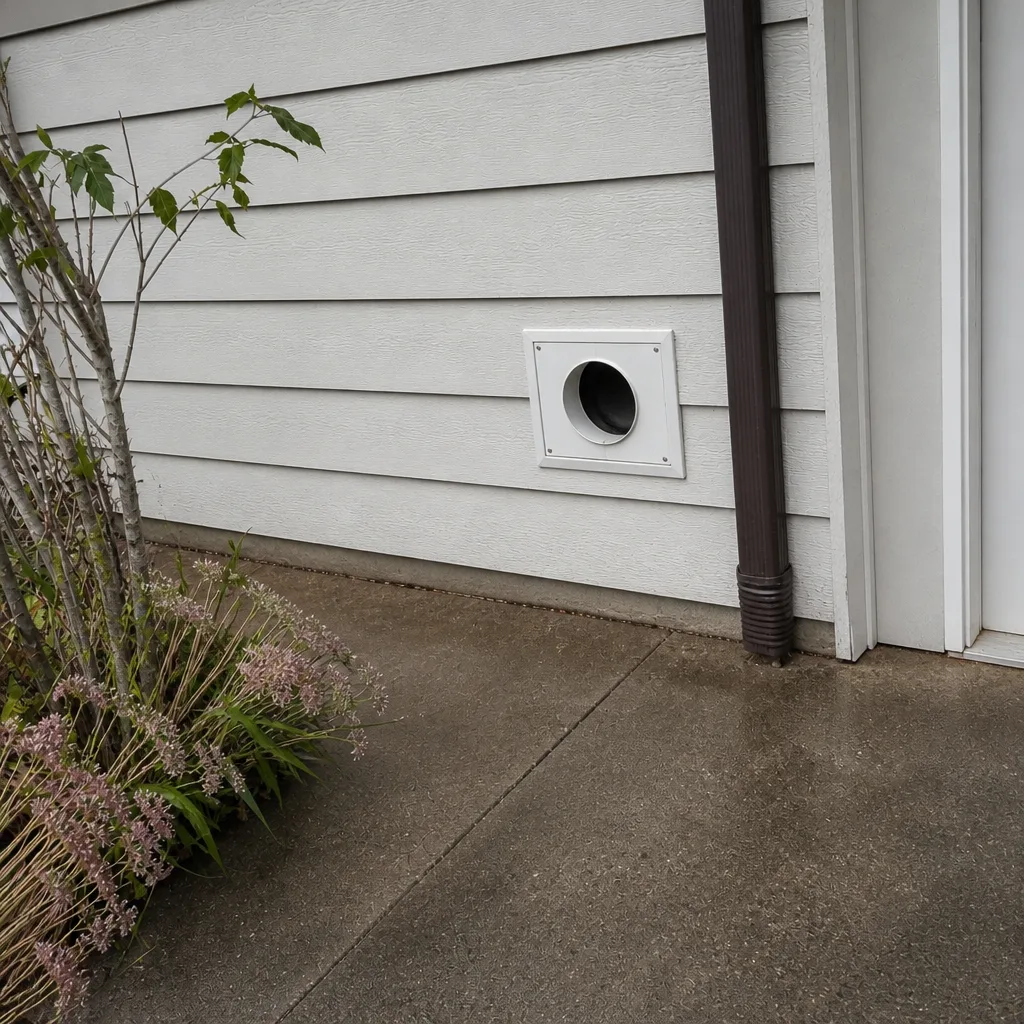 After
When to Call a Professional
Some situations call for a professional visit rather than another filter change. If you notice visible dust streaking from supply registers, a musty smell that appears whenever the heat or AC kicks on, or a sudden jump in allergy symptoms indoors, the system is telling you something. The same goes for a duct run that was damaged during a remodel, an obvious disconnect in a crawlspace, or a dryer that takes two cycles to dry a load. Visible mold on duct surfaces or inside the air handler warrants assessment, not a DIY cleaning attempt.
Edmonds Air Duct Cleaning Pros offers free estimates in Edmonds. Our technicians have up to 12 years of experience, and we can assess, clean, repair, and seal your system under one flat price agreed before work starts. Call (866) 883-0691.
Frequently Asked Questions
Professional air duct cleaning in Edmonds requires three categories of equipment: negative-pressure extraction, contact agitation tools, and inspection gear. The extraction side is typically a truck-mounted system from Ram-Air, Vac-Man, or Pullman Ermator, with high-CFM portables from Nikro or Abatement Technologies for tight access and contamination situations. Agitation runs from rotary brushes to air whips depending on duct material, and a camera scope confirms results. Call (866) 883-0691 with questions before you book.
Cheaper quotes usually mean less-capable equipment, per-vent pricing that grows on site, or skipped steps like agitation or repair. A flat per-system price in writing is the clearest way to avoid the low-coupon-then-huge-invoice pattern. Call (866) 883-0691 for an exact quote. Estimates are free.
Ask for a walk-around before work starts and look for branded gear: Ram-Air, Pullman Ermator, Nikro, and Abatement Technologies all put visible branding on their systems. Legitimate contractors expect the request. If a contractor resists, treats it as an insult, or can’t identify the brand on the machine, keep looking. Call (866) 883-0691 for a free estimate.
Yes. A rotary brush rigid enough for sheet metal will shred a fiberglass liner and can collapse a flex duct. That’s why material-specific agitation matters and why a camera scope should check condition before any brush goes in. Ask any contractor how they handle your duct material. Call (866) 883-0691 for a free assessment.
Yes, any antimicrobial used inside a duct system needs EPA registration for that application. Ask the contractor for the registration number before they apply anything. A product without that registration hasn’t been reviewed by the EPA for this use. Call (866) 883-0691 for a free estimate.
There’s no universal interval. Homes with pets, recent remodels, damp crawlspaces, or allergy-sensitive occupants often benefit from more frequent inspection, while a clean, sealed, filtered system can go longer. The right answer starts with an assessment of your specific system. Call (866) 883-0691 for a free estimate.
The Bottom Line
The equipment a duct cleaning contractor brings is the strongest single signal of what they can and can’t do. Three categories, always: extraction, agitation, and inspection. Truck-mounted extraction wins for most Edmonds homes, portables fill specific gaps, agitation has to match duct material, and sanitizers and sealants have to justify themselves with real credentials. Verify a contractor’s equipment before work starts, ask for the walk-around and the before-and-after photos of your own ducts, and insist on one flat price per system in writing. That covers the whole chain of what’s actually happening in your system, from extraction through filtration and sealing. Edmonds Air Duct Cleaning Pros offers free estimates. Call (866) 883-0691. We answer 24/7. Fast dispatch from 7am to 7pm, Sunday through Friday.
Ready to see what’s actually inside your ducts? Visit Edmonds Air Duct Cleaning Pros or call (866) 883-0691 for a free estimate.
Written by the team at Edmonds Air Duct Cleaning Pros.