
Last updated November 25, 2026
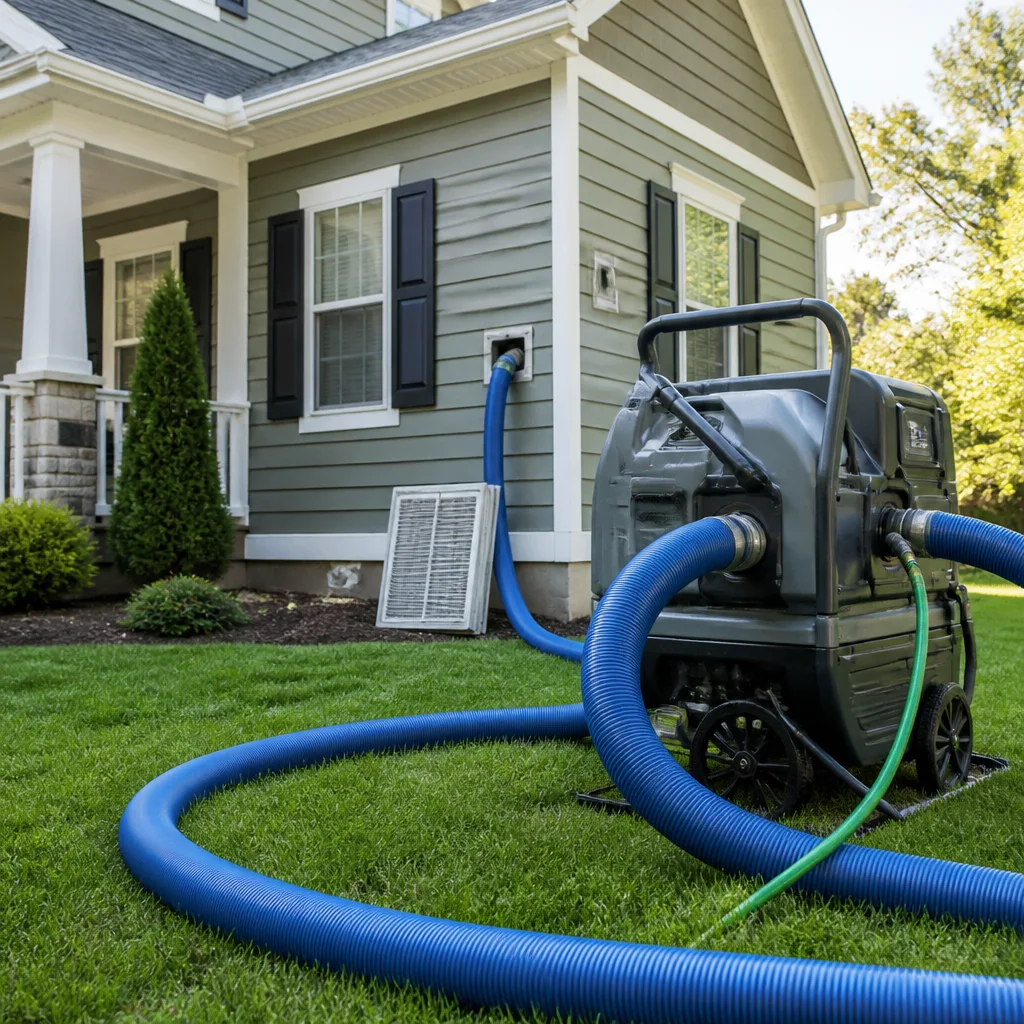 Whole-home duct cleaning
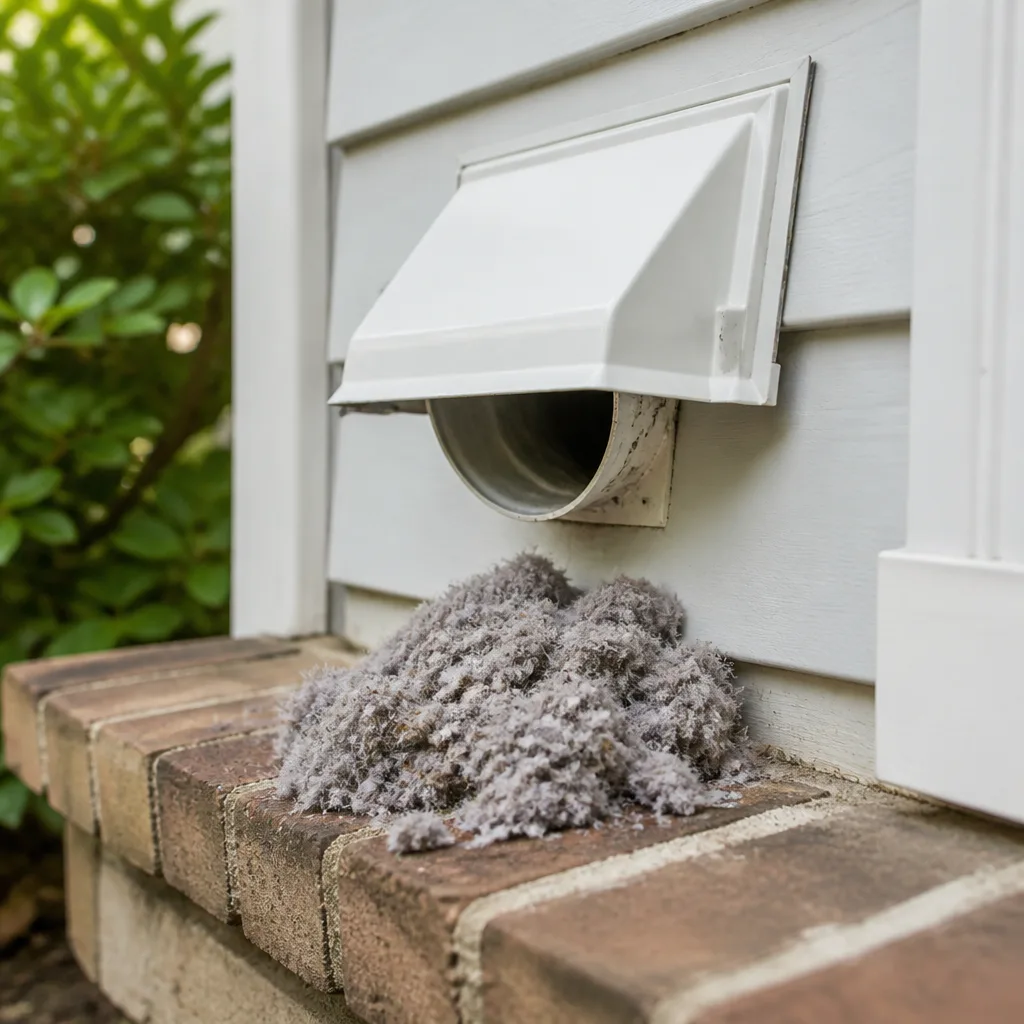 Dryer vent cleaning
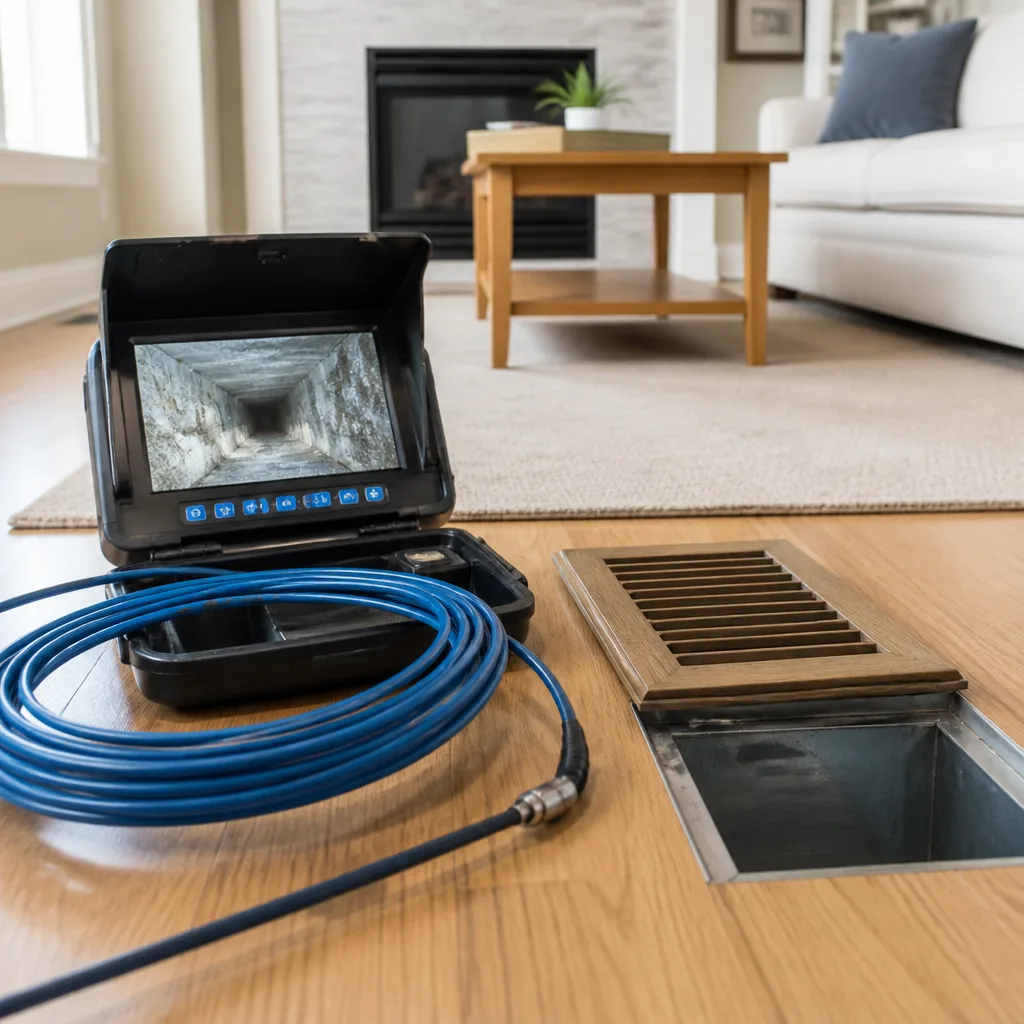 Camera inspection
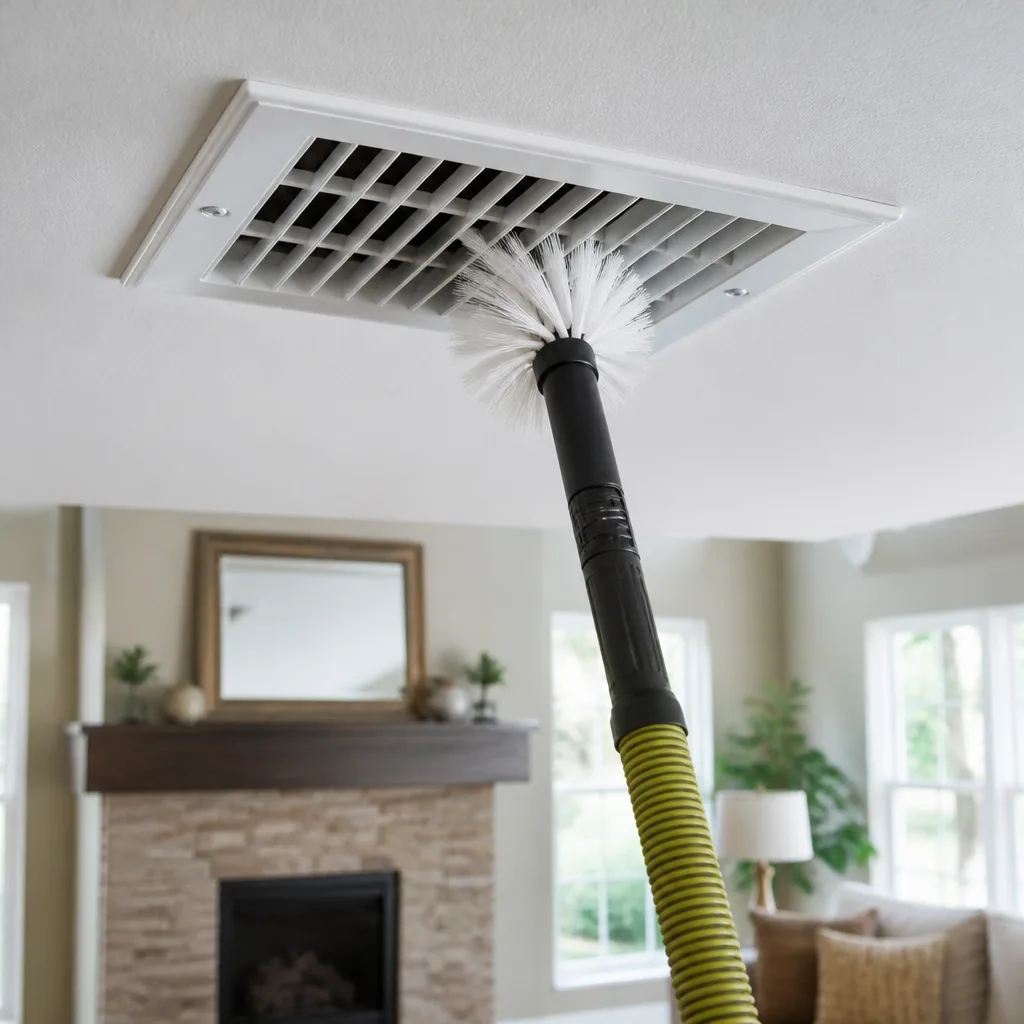 Sanitizing & deodorizing
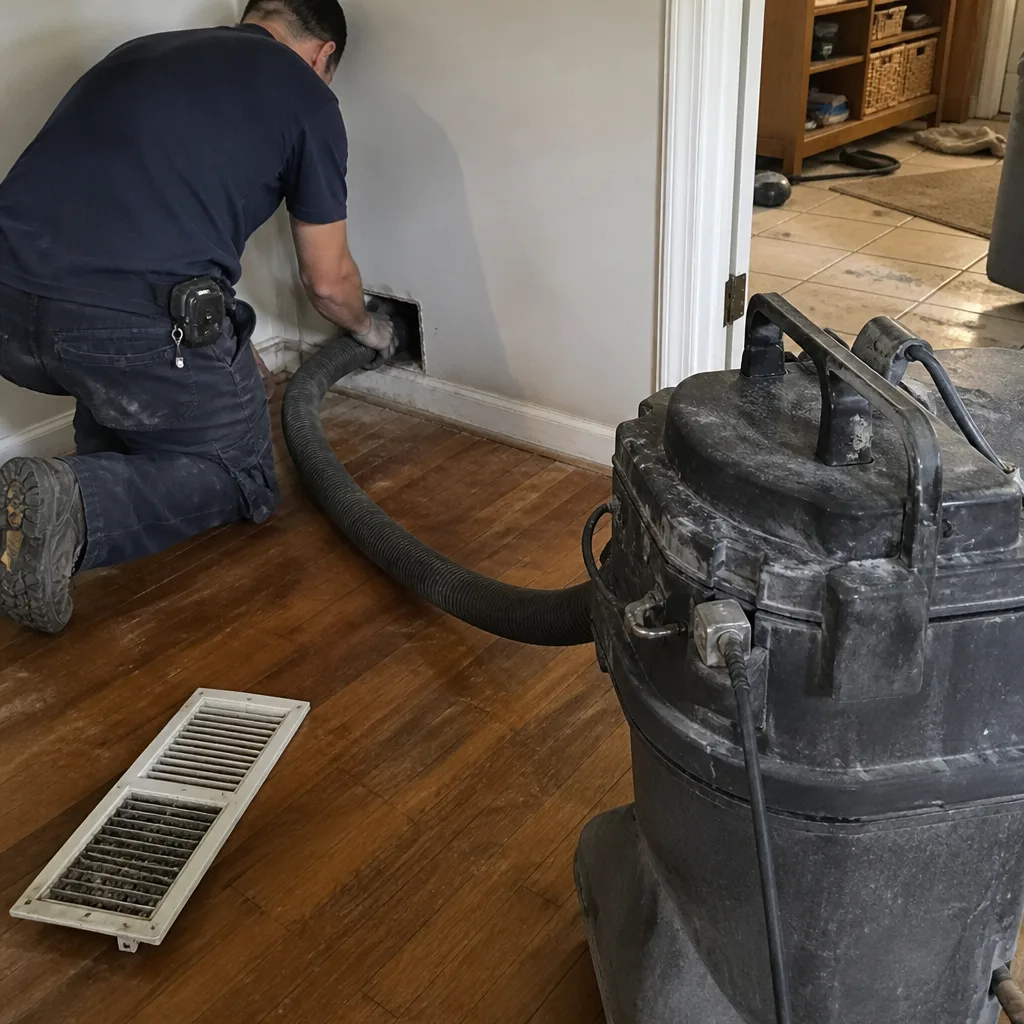
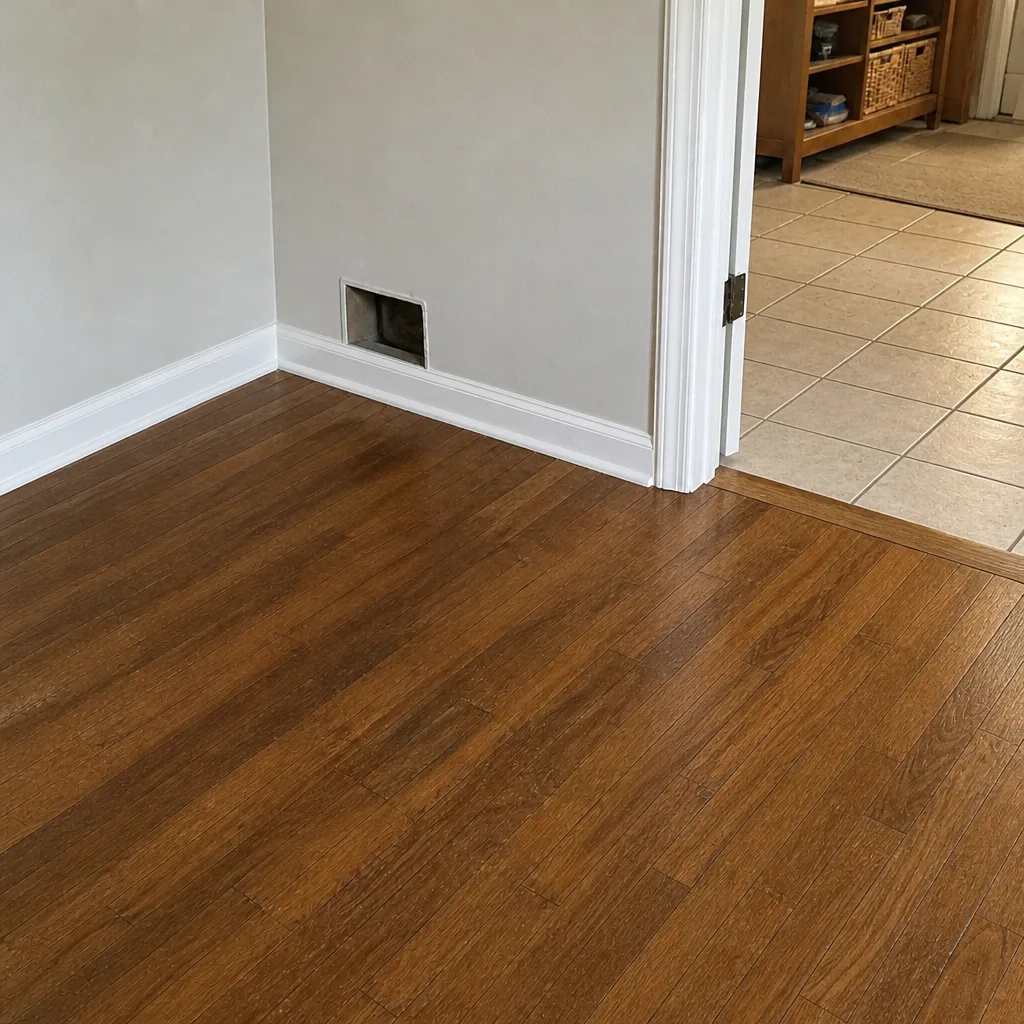
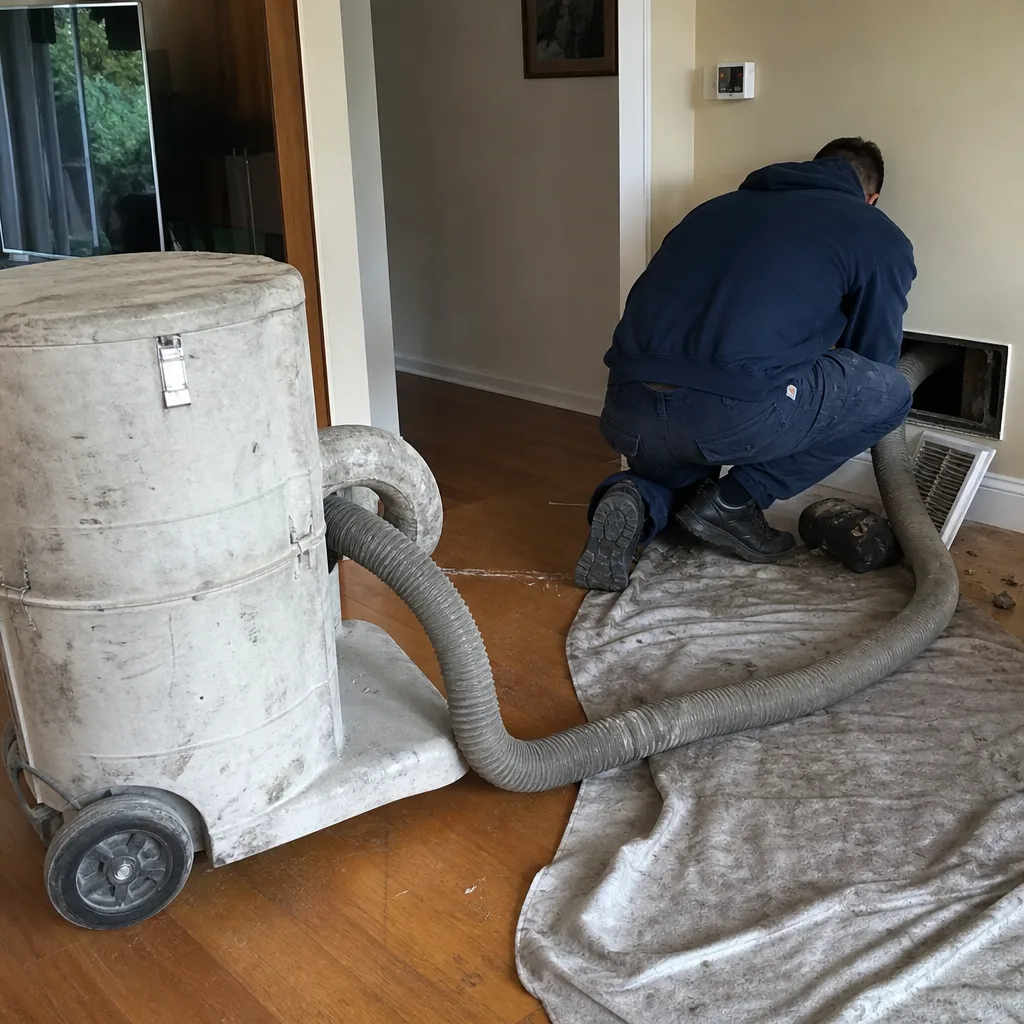
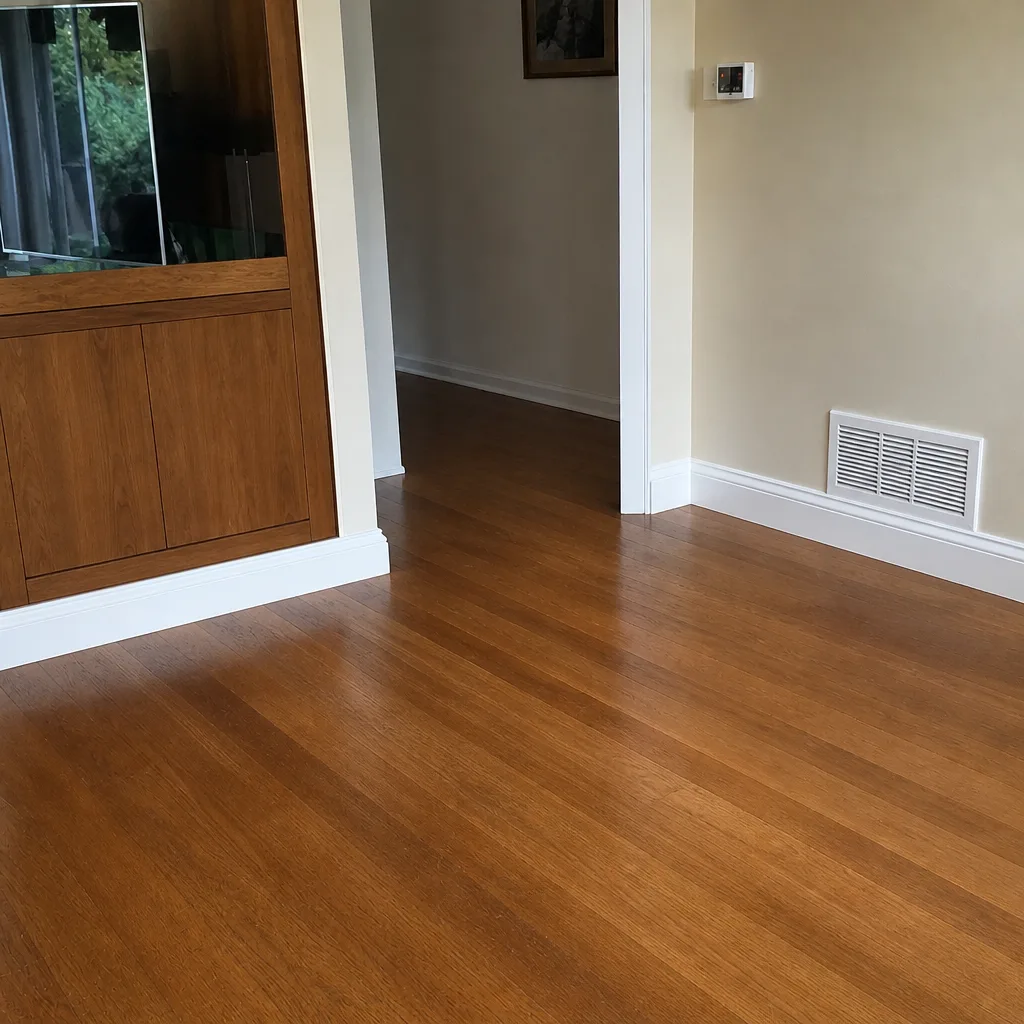
Whole-system duct and dryer vent check with before-and-after photos - you see exactly what came out of your vents
That "$99 whole-house special" is a bait ad - the real number appears once they are in your hallway, or the "clean" is a shop-vac at the register. We photograph the inside of your ducts before and after instead.
The Complete Guide to Air Duct Cleaning in Edmonds
Most Edmonds homeowners assume their ducts are either clean or dirty, and that cleaning is a simple matter of vacuuming out the loose dust. That’s not what we find. In Western Washington, duct buildup is a layered problem. Edmonds gets over 37 inches of rain a year, and that ambient humidity follows the air into your HVAC system every time it cycles. Debris doesn’t sit loosely the way it does in drier climates; it bonds to duct walls, plenum surfaces, and coil housings in damp, sticky layers that a shop vac can’t lift. This guide explains what actually accumulates inside Edmonds ductwork, why Pacific Northwest conditions change the physical character of that buildup, and how to tell a real clean from a cosmetic one. We’ll cover the anatomy of a full-system cleaning, how to verify the work with before-and-after inspection footage, and why the era your house was built in determines which tools a technician should reach for.
Quick Answer
Air duct cleaning in Edmonds means removing bonded debris, moisture-layered dust, and biological growth from the entire HVAC system, not just the visible registers. That requires source-removal methods (negative pressure plus contact agitation), not blow-and-collect vacuuming. For most Edmonds homes, a full-system cleaning with inspection takes several hours and should always include supply trunks, return plenums, the air handler cabinet, coil housing, and registers. Whole-system pricing typically runs $350 to $800 depending on system size, accessibility, and contamination level, with the written estimate setting the final price.
Styles & brands we work with
- Whole-home duct cleaning
- Dryer vent cleaning
- Camera inspection
- Sanitizing & deodorizing
Table of Contents
- Why Pacific Northwest Humidity Changes Duct Buildup
- Source-Removal Cleaning vs. Blow-and-Collect Methods
- What a Full-System Cleaning Actually Covers
- Pre-1980 Flex Duct and 1990s Fiberglass Board: Why Duct Era Matters
- Dryer Vent Cleaning and Fire Risk Reduction
- How to Verify a Duct Cleaning Was Done Properly
- Duct Repair and Sealing: Cleaning Without Repair Is Incomplete
- Filtration and Air Quality Upgrades Worth Considering
Why Pacific Northwest Humidity Changes Duct Buildup
Duct dust in Phoenix and duct dust in Edmonds are not the same material. In dry climates, dust and debris mostly stay loose and powdery, resting in low spots and along the bottom of duct runs. A strong vacuum can lift much of it. In Edmonds, with over 37 inches of rain annually and a long stretch of moist, cool months, the dust that enters your return plenum carries moisture with it. That moisture turns fine particles into something closer to a film or paste that adheres to galvanized steel, fiberglass board, and flexible duct liners.
The result is what we call layering. Over successive heating and cooling seasons, Edmonds duct systems accumulate:
- A damp base layer of bonded dust that clings to the bottom and lower walls of horizontal runs.
- A secondary layer of pet hair, lint, and fabric fibers that stick to the damp base and further mat it down.
- Biological growth in the warm, moist air handler cabinet and coil housing, where condensation is common during the cooling season.
- Construction or renovation dust that settles into return plenums and stays there because the humidity fuses it to surfaces.
That multilayered structure is why a blow-and-collect vacuum pass, which works reasonably in dry climates, leaves significant material behind here. The bonded base layer has to be mechanically agitated before negative pressure can capture it. When customers in Edmonds ask why their ducts look “clean enough” at the registers while indoor air quality still feels off, the answer usually lives in that bonded layer deeper in the system.
Homes in neighborhoods like Meadowdale, Perrinville, and the Edmonds Bowl tend to share this pattern because they all sit in the same moist, cool-air environment. For a deeper look at the cleaning process itself, see our air duct cleaning service page.
Source-Removal Cleaning vs. Blow-and-Collect Methods
The single biggest difference between a real duct cleaning and a cosmetic one is whether the technician uses source-removal cleaning or a blow-and-collect approach. Source removal means loosening debris at the source with rotating brush agitation and contact tools, then capturing it under continuous negative pressure with a high-powered vacuum unit sealed to the system. Blow-and-collect means the technician points a blower into the ducts and lets the debris blow out through open registers into the room, where some of it settles back down on your furniture and some re-enters the system.
In our experience across Edmonds homes, blow-and-collect is the wrong method for this climate because the bonded layer never releases without contact agitation. Here’s how source-removal cleaning typically runs:
- System assessment. The technician inspects accessible runs, the air handler, and the coil housing, and captures before-cleaning video or photos of the interior surfaces.
- Negative pressure setup. A high-capacity vacuum unit is connected to the system, usually at the main return or a dedicated access port, and sealed so the entire duct network stays under negative pressure during the work.
- Contact agitation. Rotobrush and Nikro agitation tools are fed into each run to loosen bonded debris from the duct walls, plenums, and fittings. Different tools are needed for rigid steel, flex duct, and fiberglass board.
- Register and component cleaning. Registers, grilles, diffusers, and the air handler cabinet are cleaned separately, since debris tends to concentrate at these transition points.
- Post-cleaning inspection. The technician re-inspects the same interior surfaces with video or photos so the customer can see what was actually removed.
- Optional sanitizing. A sanitizing application can be applied to the cleaned surfaces to address biological growth, particularly in the coil housing and moist return plenums.
The equipment makes a real difference here. Consumer-grade vacuums and entry-level agitation machines don’t pull enough static pressure or deliver enough brush torque to strip a bonded Edmonds layer. Professional-grade Rotobrush and Nikro systems are the class of equipment HVAC contractors and remediation crews rely on, and they’re what we bring to every job.
What a Full-System Cleaning Actually Covers
A “duct cleaning” that only reaches the accessible supply runs is an incomplete job. Edmonds homes typically have significant debris deposits in the return plenums and air handler cabinet, and those are precisely the areas most likely to be skipped by a budget service. A full-system cleaning should cover every component that air passes through.
Here’s the anatomy of a full-system cleaning:
- Supply trunk lines. The main rectangular or round ducts that carry conditioned air from the air handler. These accumulate less debris than returns but still develop damp layering along horizontal sections.
- Supply branch runs. The smaller ducts feeding individual rooms. Flex duct runs here are common in Edmonds homes built after 1980 and need lower-pressure agitation to avoid damage.
- Return plenums and return trunks. The largest debris collection point in most homes. Return air carries everything from room air, including pet hair, lint, and dust, and the plenum is where it deposits before reaching the filter.
- Air handler cabinet. The metal housing containing the blower and evaporator coil. Dust accumulates on the blower wheel, cabinet interior, and coil fins, and biological growth is most likely here.
- Coil housing and drain pan. The evaporator coil sits wet during cooling season, which makes its housing the single most biologically active part of the system. Cleaning coils and drain pans matters as much as cleaning ducts.
- Registers and grilles. Every supply and return register should be removed, cleaned, and reinstalled. Cleaning inside the duct while leaving a dusty register in place simply re-contaminates the run.
When we talk about an assess, clean, and restore process, this is what we mean: assess every component in the chain, clean each one with the appropriate tool, and restore the system to a state where it’s ready to perform again. Any service that scopes the job down to accessible runs is missing the majority of the contamination.
Pre-1980 Flex Duct and 1990s Fiberglass Board: Why Duct Era Matters
Older Edmonds homes don’t just have older ducts. They have different duct materials, and different materials need different tools and pressure settings. Treating a 1970s flex duct run the same as a modern rigid steel run risks tearing the duct liner and making the problem worse.
Here’s how duct era typically maps to what a technician finds in Edmonds:
- Pre-1980 construction. Often rigid galvanized steel supply trunks with early-generation flexible branch runs. The flex duct from this era can be brittle or degraded, and it needs low-pressure agitation with soft-brush tools. Aggressive high-pressure work can perforate the inner liner and create new leaks.
- 1980s to 1990s construction. A mix of rigid trunk and flexible branch, with some homes using fiberglass board duct for trunks and plenums. Fiberglass board is porous and traps debris in its surface, but it also cannot tolerate aggressive wire brush agitation. It requires softer contact tools and careful pressure control.
- 2000s and later. More likely to be modern flex duct throughout, which is generally easier to clean but still requires the right brush head and pressure to avoid liner damage.
- Concrete slab or crawlspace systems. Some older Edmonds homes have under-slab or crawlspace ducts that can collect moisture and pest debris and often need inspection cameras before any cleaning begins.
This is why the technician’s inspection step matters more than most customers realize. The right tool selection and pressure setting are determined by what’s actually in the walls, not by a one-size-fits-all approach. Homes in the older parts of Edmonds, including sections near downtown and the waterfront-facing neighborhoods, are more likely to have pre-1980 systems that call for the gentler tool set.
If the ducts are damaged during cleaning, the fix is HVAC cleaning combined with duct repair, not just another vacuum pass. Repair capability matters.
Dryer Vent Cleaning and Fire Risk Reduction
Dryer vent cleaning is a separate service from air duct cleaning, but it belongs in any complete indoor air quality conversation. Lint accumulation in a dryer vent restricts airflow, and restricted airflow raises dryer operating temperature and increases fire risk. In Edmonds, where damp conditions mean clothes dryers run frequently through the long wet season and lint can clump into dense, damp plugs rather than loose fluffy masses, the fire safety case for regular vent cleaning is particularly strong.
Signs your dryer vent needs cleaning:
- Clothes take longer than one cycle to dry.
- The dryer exterior feels hot to the touch during operation.
- The lint screen fills up faster than usual.
- You notice a burning or musty smell near the dryer.
- It’s been more than a year since the vent was last cleaned, or you can’t remember the last cleaning.
- You can see lint accumulation around the exterior vent flap.
Dryer vent cleaning is a fire risk reduction service, plain and simple. A technician feeds a rotating brush through the full length of the vent from the dryer connection to the exterior termination, then vacuums out the loosened lint. For Edmonds homeowners this is often the single highest-impact safety service we can perform, and it pairs naturally with a system cleaning if it’s been a few years. See our dryer vent cleaning service for details on how the process works.
How to Verify a Duct Cleaning Was Done Properly
The most common complaint we hear about the duct cleaning industry is that it’s hard to know if the work actually happened. That’s fair. A customer can’t see inside their ducts, and the technician is gone before the invoice gets paid. The verification standard is simple: before-and-after video or photographic inspection footage of the interior surfaces of the same duct sections, taken by the technician and shared with the customer on the same visit.
Here’s how to verify a cleaning was done properly:
- Ask for a pre-cleaning inspection. Before any cleaning starts, the technician should look inside accessible duct runs with a camera and note what’s there. If a company won’t do this, that’s a warning sign.
- Watch for negative pressure at the registers. During cleaning, a sealed vacuum unit should be pulling with noticeable negative pressure at the system. If the registers aren’t drawing air inward when tested, the setup is wrong.
- Confirm the method. Ask whether the technician is using contact agitation (Rotobrush or Nikro) plus negative pressure, or a blow-and-collect blower. Blow-and-collect leaves the bonded Edmonds layer behind.
- Check the coil and air handler. Ask to see before-and-after of the coil housing and air handler cabinet, not just the supply runs. Those are where contamination hides.
- Review post-cleaning footage. The technician should re-inspect the same duct sections after cleaning and share the images with you before leaving.
- Inspect the registers after reinstall. Registers should be removed, cleaned, and reinstalled without visible dust or debris on the faces or inside the grilles.
If any of these steps get skipped, ask why before the technician leaves. The written estimate should also specify what will be cleaned so there’s no ambiguity later. A company that documents its work up front is a company you can trust with the job.
Duct Repair and Sealing: Cleaning Without Repair Is Incomplete
Cleaning a duct system that leaks is a temporary fix at best. Edmonds homes often have duct leakage at the joints between trunk lines, at flex-duct connections, and around the air handler cabinet, which means the system draws in unconditioned air from attics, crawlspaces, and wall cavities along with whatever debris is already there. Cleaning without sealing leaves the system re-contaminated from day one.
A full-system approach means assess, clean, and restore. That third step matters most for home performance and energy bills.
- Leak detection. A technician checks joints, transitions, flex duct connections, and cabinet seams for gaps and loose fittings.
- Sealing. Gaps and loose joints are sealed with the appropriate mastic or tape so the system draws air only through intended return paths, not through crawlspace or attic air.
- Repair. Torn flex duct liners, disconnected branch runs, and crushed or kinked sections are repaired or replaced rather than cleaned around.
- Post-repair verification. The system is checked again to confirm airflow and pressure are restored.
Duct sealing also affects how well cleaning holds. A sealed system keeps bonded debris from re-forming as quickly because it isn’t pulling in moist air from unconditioned spaces during heating and cooling cycles. If you’re noticing uneven room temperatures in an Edmonds home, particularly in two-story houses where the upper floor runs hot in summer and cold in winter, a duct inspection is a reasonable place to start.
Filtration and Air Quality Upgrades Worth Considering
Cleaning removes what’s already in the ducts. Filtration addresses what comes in next. For Edmonds homes where the system is cycling frequently through the wet season and pulling in moisture-laden air, filtration upgrades are worth considering, especially when a family member has allergies or asthma or when pets live in the house.
We work with Honeywell and Aprilaire air quality products, which means we can recommend filtration and purification solutions matched to the system rather than sending you to a hardware store for a generic filter. Options commonly considered include:
- Upgraded filter cabinets that hold higher-MERV media filters without overloading the blower.
- Whole-home air purification systems that use UV or photocatalytic technology in the air handler.
- Humidity control components, since managing interior moisture matters more in Edmonds than in drier climates.
- Filter replacement routines aligned with the seasonal demands of a wet-weather climate.
The right upgrade depends on your system and the specific concern you’re addressing. A technician who assesses the whole chain can recommend the right combination rather than adding filtration as an afterthought. Abatement Technologies equipment also lets us handle remediation-level scenarios, from mold contamination to post-renovation construction dust, where standard cleaning isn’t enough.
Common Mistakes to Avoid
- Hiring the lowest bidder without asking about method. A low quote usually means blow-and-collect or an accessible-runs-only scope, and both leave the bonded Edmonds layer in place. Ask directly: “Are you using contact agitation and negative pressure, and will I see before-and-after footage?”
- Skipping the air handler and coil housing. Cleaning only the supply ducts while leaving the cabinet, coil, and return plenum untouched misses most of the contamination in an Edmonds home. Insist that the whole chain is in scope.
- Cleaning without repairing leaks. If joints and connections aren’t sealed, the system re-contaminates as soon as it starts pulling in crawlspace or attic air. Cleaning and sealing belong together.
- Ignoring the dryer vent. Dryer vent cleaning is a fire safety service, not an extra. In a damp climate where lint clumps densely, going years without a cleaning is a real risk.
- Running aggressive tools through old flex or fiberglass board. Pre-1980 flex duct and fiberglass board trunks need gentler tools and lower pressures than modern rigid steel. If the technician doesn’t inspect before starting, damage is possible.
- Forgetting the registers. Reinstalling dusty registers over freshly cleaned runs re-contaminates them. Every register, grille, and diffuser should be removed and cleaned as part of the job.
- Expecting a one-time cleaning to last forever. In a wet climate, ducts accumulate again over time, especially if filtration and sealing aren’t addressed. A sensible re-cleaning interval for most Edmonds homes is every few years, with dryer vent cleanings more frequent.
See the difference
 Before
 After
 Before
 After
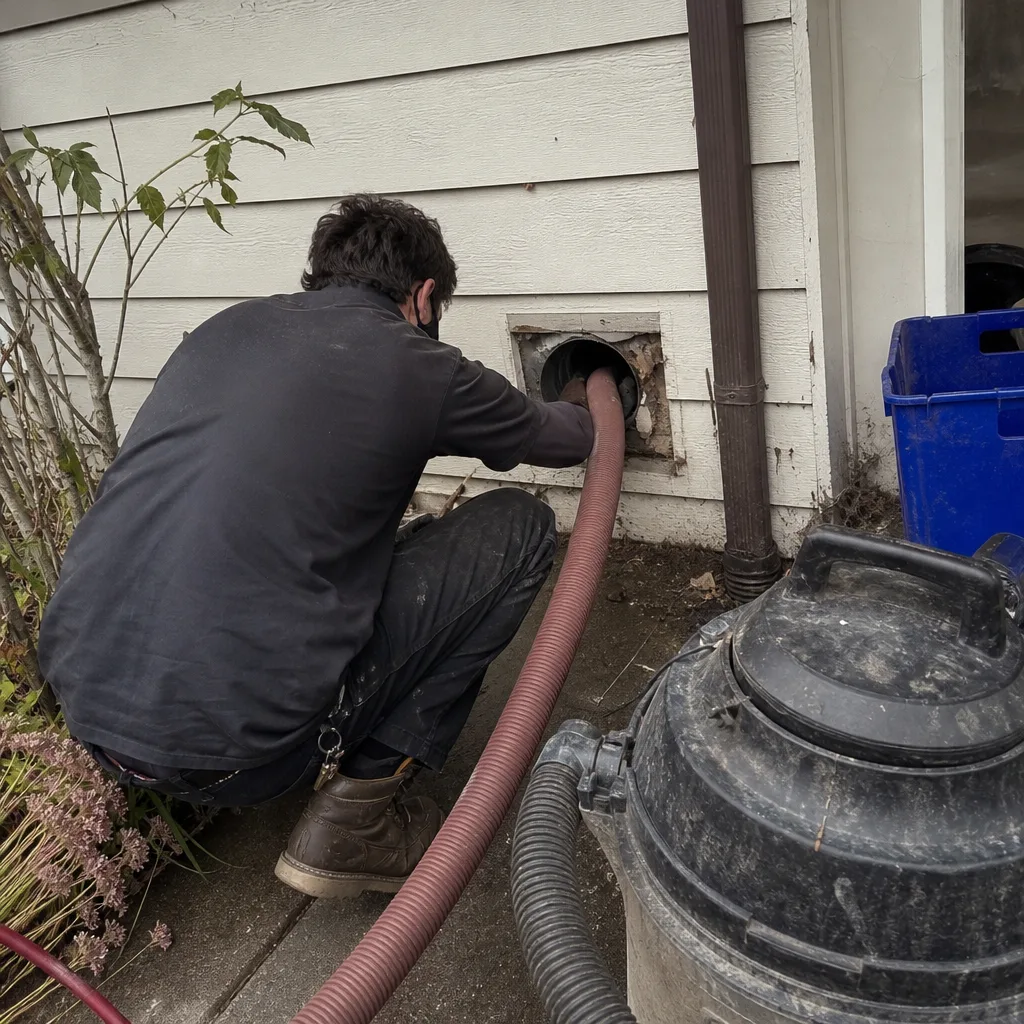 Before
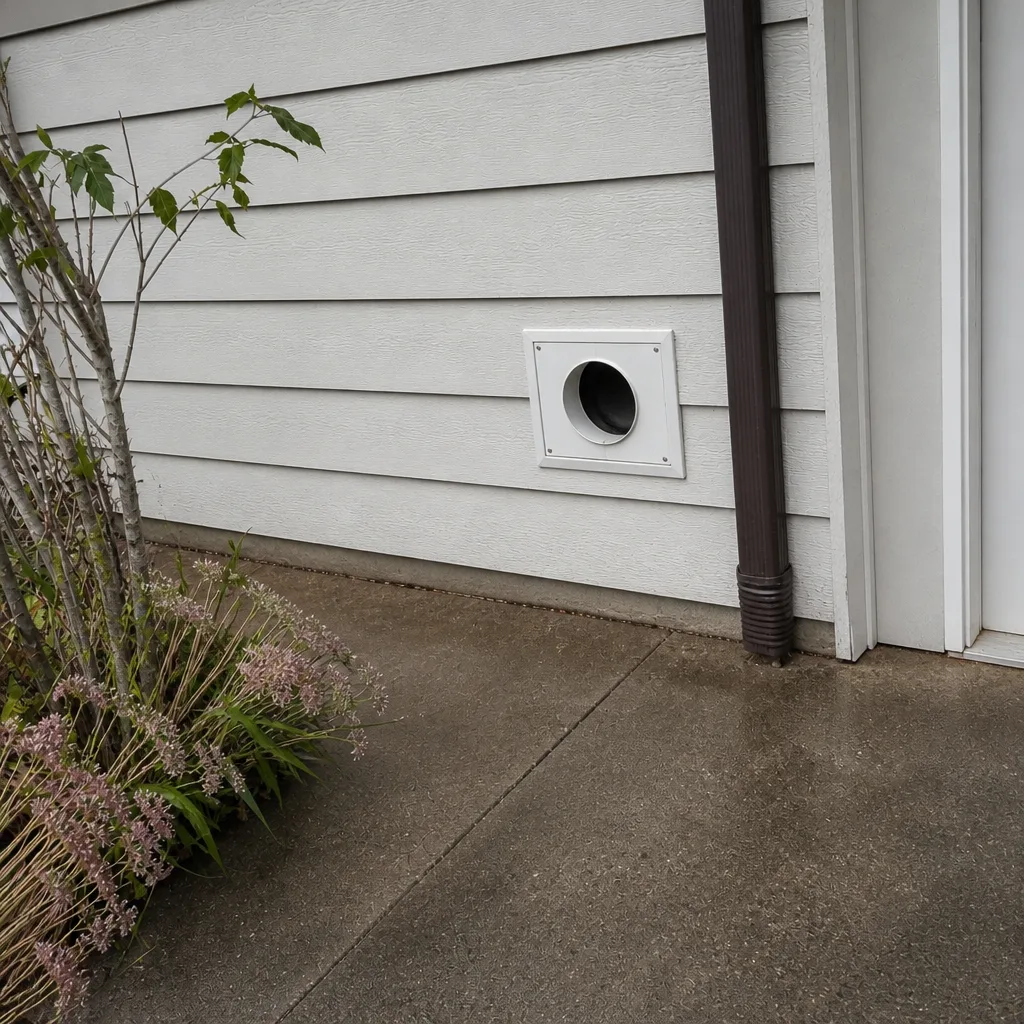 After
When to Call a Professional
Some duct issues can wait while you save for the job, and some shouldn’t. Call a professional if you notice debris blowing from registers when the system starts, if a strong musty or dusty smell comes through the vents, if family members are experiencing new allergy or asthma symptoms that seem tied to the home, if the system has visible mold growth around the registers or inside the air handler, or if you’ve recently completed a renovation that produced significant dust. Call immediately if the dryer has been running hot or taking longer than usual to dry clothes; that’s a fire risk concern. We can also help if your energy bills have climbed without explanation or if some rooms never heat or cool properly, since those often trace back to leaking ducts. Edmonds Air Duct Cleaning Pros offers free estimates in Edmonds. Call (866) 883-0691 to book an assessment.
Frequently Asked Questions
Air duct cleaning in Edmonds typically runs $350 to $800 for a full-system cleaning, with the final price depending on system size, contamination level, number of registers, and whether duct repair or sanitizing is included. The written estimate sets the final price, and it should specify exactly what’s included: supply trunks, return plenums, air handler cabinet, coil housing, and registers. Call (866) 883-0691 for an exact quote; estimates are free.
Cheap quotes are usually cheaper for a reason: they scope the job to accessible runs only, they use blow-and-collect methods instead of contact agitation with negative pressure, or they skip the air handler and coil housing. In a damp climate like Edmonds, that produces a cosmetic clean, not a real one. Ask a low-quote company exactly what they’ll clean and what equipment they use, and compare against a whole-system scope. Then call (866) 883-0691 for a free estimate on the job done right.
Ask for before-and-after video or photographic inspection footage of the same duct sections, the coil housing, and the air handler. A technician using professional equipment should be able to walk you through the images before leaving. If a company can’t provide this, that’s a red flag. Call (866) 883-0691 to schedule a cleaning where you’ll see the footage on the same visit.
For most Edmonds homes, every three to five years is a reasonable interval, and more often if you have pets, allergies, or recent renovation dust. Dryer vent cleaning is more frequent, roughly once a year. In a wet climate, ducts accumulate bonded debris faster than in dry regions, so trusting a fixed multi-year interval without inspection is risky. Call (866) 883-0691 if it’s been more than three years since your last cleaning.
Yes. Over 37 inches of rain annually means ambient moisture enters the system on every HVAC cycle, and that moisture causes dust and debris to bond to duct walls rather than sit loosely. That’s why blow-and-collect methods leave material behind in Edmonds that might clear in a drier city. Contact agitation with professional-grade equipment is the correct method here. Call (866) 883-0691 to book an inspection.
No, dryer vent cleaning is a separate service, but both belong in a full indoor air quality plan. In a wet climate, lint clumps densely and dryer vents require regular cleaning to reduce fire risk. If it’s been more than a year, get it scheduled alongside a duct cleaning. Call (866) 883-0691 for a combined free estimate.
The Bottom Line
Duct cleaning in Edmonds isn’t a generic dust job, because the Pacific Northwest climate turns dust and debris into a bonded, layered problem that ordinary vacuuming won’t lift. The right approach uses professional-grade equipment, covers the entire system from supply trunks to the air handler and coil housing, and pairs cleaning with duct repair and sealing so the result holds. Verification matters too, and before-and-after inspection footage is the standard every homeowner should expect. Round it out with regular dryer vent cleaning as a fire safety measure, and give serious thought to filtration upgrades through Honeywell and Aprilaire to keep the system cleaner between cleanings. For a full-spectrum assessment using Rotobrush, Nikro, and Abatement Technologies equipment, call Edmonds Air Duct Cleaning Pros at (866) 883-0691 for a free estimate. We answer 24/7. Fast dispatch from 7am to 7pm, Sunday through Friday.
Written by the team at Edmonds Air Duct Cleaning Pros.