
Last updated November 25, 2026
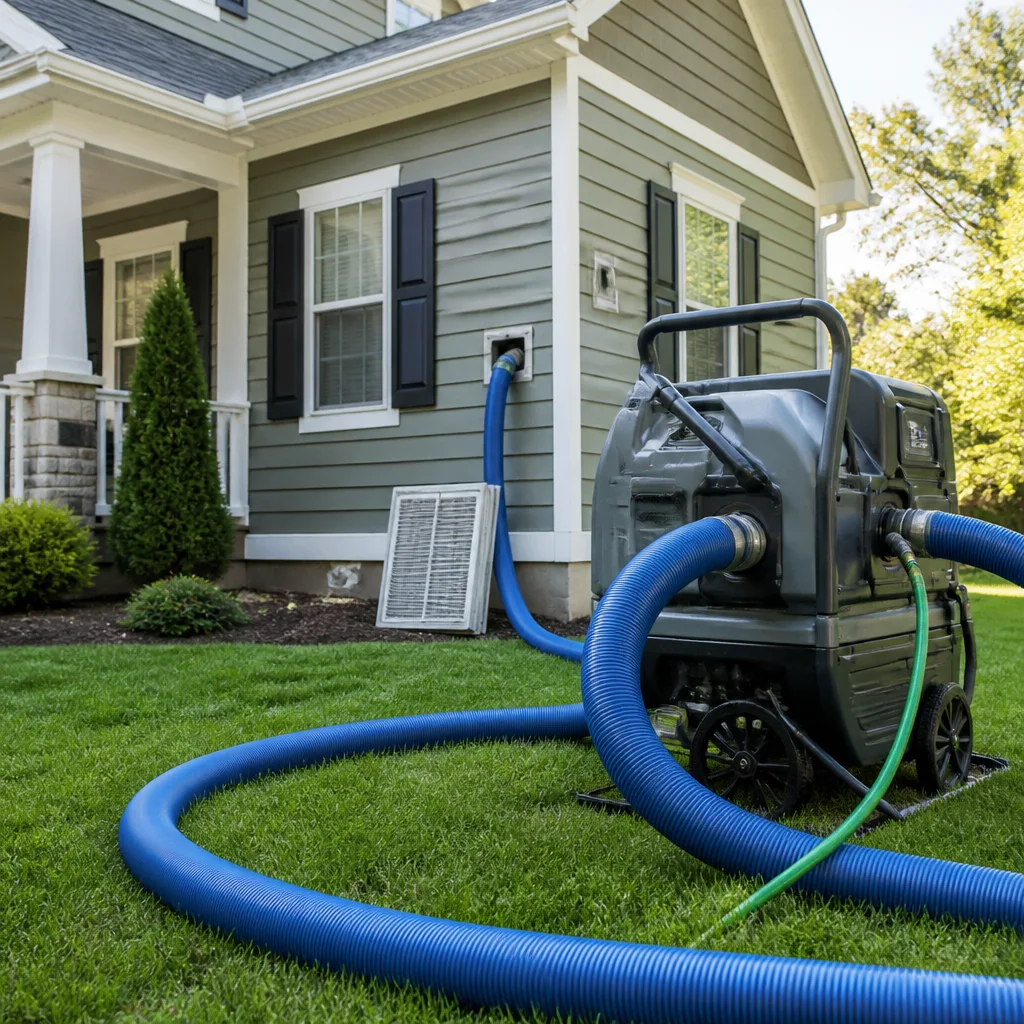 Whole-home duct cleaning
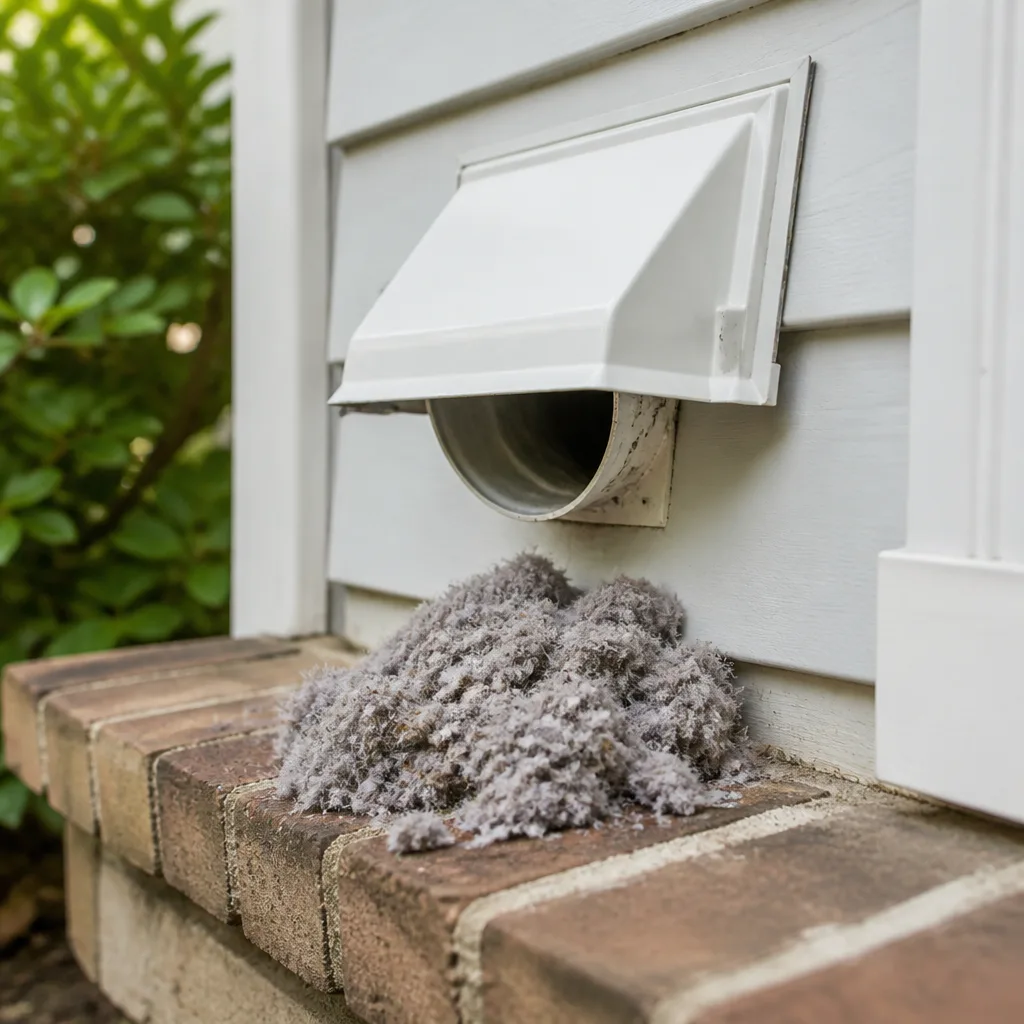 Dryer vent cleaning
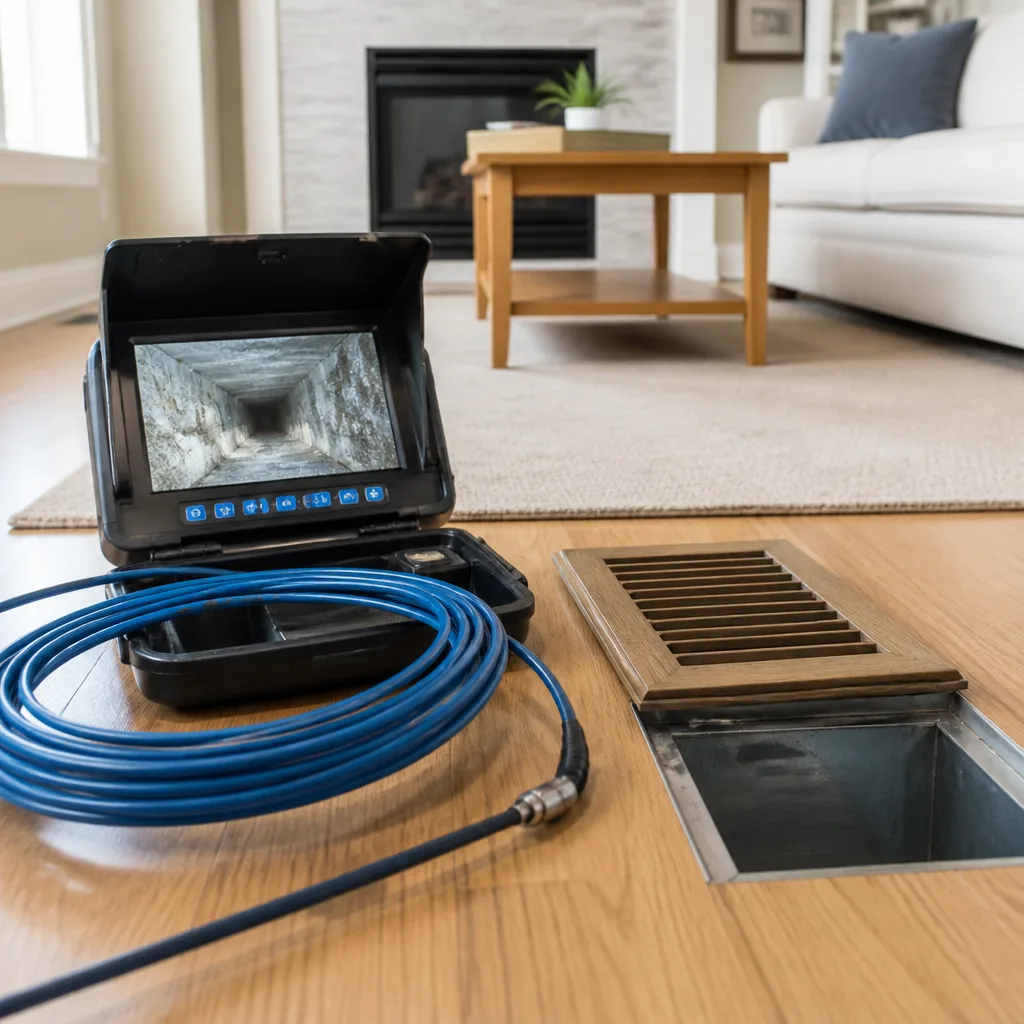 Camera inspection
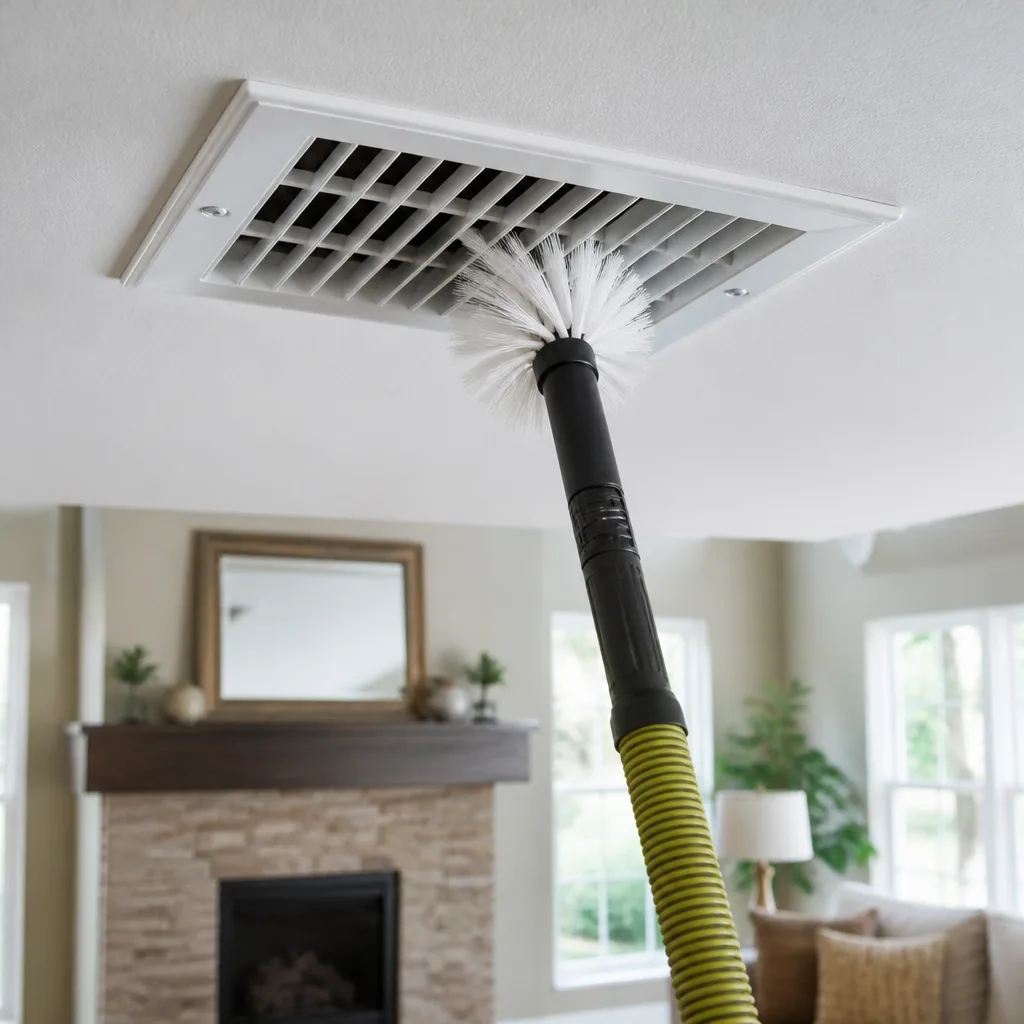 Sanitizing & deodorizing
Whole-system duct and dryer vent check with before-and-after photos - you see exactly what came out of your vents
That "$99 whole-house special" is a bait ad - the real number appears once they are in your hallway, or the "clean" is a shop-vac at the register. We photograph the inside of your ducts before and after instead.
Air Duct Cleaning Emergency Preparedness Guide for Edmonds Homes
Most homeowners in Edmonds treat a house fire, a sewage backup or a flooded crawl space as a cleanup problem you handle room by room. The HVAC system barely crosses anyone’s mind. That’s the misconception this guide corrects. An air handler that ran during a fire, or ductwork that sat through a sewage backup, pulls contamination into a network of insulated passages you can’t see and rarely think about. Soot, biological residue and fine smoke settle on duct walls and coil fins and don’t leave with a wipe-down. Below we map each Edmonds emergency scenario to the duct actions that prevent long-term air quality damage, what to document before anything happens, and when standard cleaning isn’t enough.
Quick Answer
After a fire, flood, sewage backup or wildfire smoke event, your ductwork should be professionally inspected before the HVAC system runs again, and in most cases cleaned and sanitized with restoration-grade equipment rather than a routine maintenance pass. The right response depends on the type of contamination: fire and smoke need soot removal and coil cleaning, water intrusion needs action inside a 48 to 72 hour mold germination window, sewage needs EPA-registered antimicrobial treatment, and wildfire smoke needs assessment of what bypassed your filter. Edmonds Air Duct Cleaning Pros scopes each of these scenarios with a free estimate, and you can reach us at (866) 883-0691.
Styles & brands we work with
- Whole-home duct cleaning
- Dryer vent cleaning
- Camera inspection
- Sanitizing & deodorizing
Table of Contents
- After a Fire: Why the HVAC System Must Be Locked Out
- Wildfire Smoke Events and Sub-Micron Particles That Bypass Filters
- Water Intrusion and the 48 to 72 Hour Mold Window
- Sewage Backup Near HVAC Equipment: Why Cleaning Isn’t Enough
- Restoration-Grade Cleaning vs. Standard Cleaning
- Pre-Emergency Documentation: What to Photograph Now
- The Step-by-Step Response Sequence for Each Emergency
- Working With Your Insurer on Duct-Related Claims
After a Fire: Why the HVAC System Must Be Locked Out
When a fire is extinguished, the first instinct is to open windows and get air moving. That instinct is wrong if the HVAC system can still engage. A forced-air system that cycles after a fire draws airborne soot and combustion byproducts into the return side and distributes them across the entire duct network, the supply registers and the evaporator coil. The result is a home that smells of smoke long after the walls are repainted. The correct protocol, in our experience, is to shut the system down at the thermostat and, if the equipment is safe to access, at the breaker, then leave it off until a technician has scoped the ducts and coil.
Soot doesn’t behave like dust. It’s oily, acidic and sticky, and it bonds to galvanized duct walls and finned coil surfaces rather than sitting loose. Combustion byproducts also carry an odor that lingers in porous duct liner and flex duct even after visible residue is gone. A standard maintenance cleaning with a consumer-grade vacuum won’t break that bond. Restoration-grade work uses agitation tools and negative-pressure extraction to lift the residue and capture it before it re-enters the living space.
- Stop the system. Lock out the air handler so no one restarts it during cleanup.
- Protect the coil. Sooty coil fins cut heat transfer and trap odor; they need dedicated cleaning.
- Replace the filter, don’t just vacuum it. A loaded filter keeps releasing soot into the airstream.
- Check duct liner and flex runs. Porous materials may need replacement, not just cleaning.
- Sanitize after physical removal. Odor control follows residue removal, not the other way around.
Our technicians have up to 12 years of experience reading fire damage in duct systems, and we bring professional-grade Rotobrush and Nikro equipment to jobs where entry-level machines stall. If a fire has hit your home in Edmonds, the sooner the system is assessed, the less residue migrates deeper into the network.
Wildfire Smoke Events and Sub-Micron Particles That Bypass Filters
Wildfire smoke in the Puget Sound region is an intermittent reality, and Edmonds homes see it most summers and early falls. What surprises homeowners is that the filter they upgraded to didn’t stop everything. Standard MERV-8 filtration captures coarse smoke particles but lets a large share of sub-micron PM2.5 pass through. Those sub-micron particles travel deeper into the duct network, deposit on surfaces, and settle into insulated liners and coil fins. The smell of a smoke event can outlast the event itself by weeks when the system ran during it.
A good first step is filtering better. We work with Honeywell and Aprilaire filtration and purification products, and an upgrade to a higher-MERV media filter or a purifier can meaningfully reduce what reaches your ducts on the next event. But enhanced filtration is a preventive measure, not a cleanup. When does smoke call for professional extraction rather than just closing the windows and running a better filter?
- Visible residue or odor after the event clears. If filters look dark or the home still smells of smoke days later, contamination reached the ducts.
- Extended smoke exposure. Multi-day smoke events with the system running under load deposit more than a single smoky afternoon.
- Allergy or asthma symptoms that flare with airflow. This suggests the system is reintroducing particles into living spaces.
- Porous duct components. Lined or flex ducts capture PM2.5 more readily than bare galvanized steel and may warrant replacement.
- Coil fouling. A gritty coil reduces HVAC efficiency and can be a reservoir for smoke odor.
For most Edmonds households, the answer is a three-part response: seal up and filter during the event, clean the system once the smoke clears, then upgrade filtration going forward. Our air duct cleaning service is often the middle step in that plan.
Water Intrusion and the 48 to 72 Hour Mold Window
Flooding in Edmonds doesn’t usually look like a tidal wave. It looks like a washing machine that let go, a roof leak that soaked the attic, a crawl space that pooled after heavy rain, or a burst supply line that fouled the air handler and duct runs. However the water arrives, the timeline that follows is what matters. Mold can germinate on wet organic materials within 48 to 72 hours. Duct materials that stay wet well past that window are an incubation site, not a repair site.
The critical question is whether ductwork that contacted standing water can be saved. In our experience, it depends on the material and how fast the system dried.
- Bare galvanized metal: often salvageable if dried quickly and cleaned and sanitized.
- Internally lined duct: hard to dry and prone to mold growth inside the liner; replacement is usually the safer call.
- Flex duct: the corrugated interior traps moisture and is difficult to clean thoroughly; most wet flex should be replaced.
- Duct board: porous and rarely recoverable after significant water contact.
If the air handler sat in water, the blower, wiring and coil are their own concern, and a licensed HVAC professional should inspect that equipment before it’s re-energized. Wet ductwork also calls for stopping the system immediately so mold spores aren’t distributed while you decide what to do. What we see in Edmonds crawl spaces after a wet winter is that drying happens slower than homeowners expect because the space is already humid and poorly ventilated. The 48 to 72 hour clock doesn’t pause for that.
Once the source is stopped and materials are dry, cleaning and sanitizing the duct system is the next step. Where mold is present, we use Abatement Technologies equipment and EPA-registered antimicrobial products as part of that process. Duct repair and sealing are often needed too, since a leaking duct that let water in will also leak air once things dry out. Our broader HVAC cleaning service addresses the coil and air handler as well as the duct runs.
Sewage Backup Near HVAC Equipment: Why Cleaning Isn’t Enough
A sewage backup that reaches your HVAC equipment or ductwork is a different category of problem from water damage alone. Sewage carries bacteria, viruses and other biological contaminants, and the residue that contacts your ducts is a health concern, not just a smell concern. Physical cleaning alone is insufficient here. The affected duct surfaces need treatment with EPA-registered antimicrobial products appropriate to the contamination category, and the work needs to be documented so the biological concerns are actually addressed.
When you’re evaluating a contractor for this kind of job, ask direct questions and don’t accept vague answers.
- What products are you using? Ask for the name and registration status of any antimicrobial application.
- How will you isolate the work area? Negative pressure containment prevents cross-contamination of the rest of the house.
- Will any materials be removed? Porous duct components that absorbed contaminated water generally need to be cut out, not cleaned.
- What documentation do you provide? Photos before and after, product names, and a written scope belong in the file for your insurer.
- How are PPE and containment handled? Technicians should be outfitted appropriately for biological contamination work.
If you’re unsure whether your backup reached the HVAC system, err toward a professional inspection. A small backup that stayed in the bathroom is one thing. One that touched the air handler or a floor register is another. We can scope it with a free estimate and tell you honestly whether professional treatment is needed or whether you can skip it.
Restoration-Grade Cleaning vs. Standard Cleaning
Routine air duct cleaning is a maintenance service. It removes accumulated dust and debris and improves airflow, and it’s genuinely useful every few years. Restoration-grade cleaning is a different job. It starts with a scoped assessment, uses negative pressure and HEPA filtration, incorporates antimicrobial treatment where the contamination category calls for it, and closes with verification that the system is actually clean. In our experience, homeowners often don’t realize which one they’ve been sold until after the job is done.
The equipment matters on both sides. Rotobrush and Nikro systems are the standard workhorses for professional-grade duct cleaning and handle most residential work well. For contamination-level scenarios, Abatement Technologies equipment adds capability that entry-level machines can’t match: HEPA negative-air containment and the ability to handle higher volumes of contaminated air without spreading it. It’s the difference between cleaning a dirty system and remediating a contaminated one.
- Standard cleaning: source removal of dust and debris, typical filter and register work, before-and-after photos.
- Restoration-grade: a scoping assessment, containment and negative pressure, antimicrobial applications where warranted, documented verification.
- What restoration is not: a chemical fog sprayed into the ducts as a substitute for physical removal. Residue has to come out first.
We use both levels of equipment because Edmonds homes call for both, depending on what actually happened.
Pre-Emergency Documentation: What to Photograph Now
Here’s the part almost no homeowner thinks about until after a loss. If your insurer and your contractor both have a clean before-and-after picture of your duct system, everything in an emergency claim goes faster and more accurately. You can spend twenty minutes now and save weeks of back-and-forth later. What should you capture?
- Photograph the air handler. The brand plate, model and serial number, the filter size, and the surrounding area.
- Photograph every supply and return register. Note the room each one serves in a quick list.
- Photograph accessible duct runs. Basement, attic and crawl space exposures. Note material types: metal, flex or duct board.
- Note the filter type and size and when you last changed it, with a date stamped photo.
- Photograph your thermostat and settings so an HVAC lockout can be verified where needed.
- Save the documentation. Keep the photos in cloud storage and note the install details in a single document.
If any part of your system has been retrofitted, changed or repaired, note that too. In Edmonds, older homes frequently carry a mix of original duct runs and later additions, and having that recorded helps a contractor size the scope accurately when the system needs emergency attention. It also gives your insurer a baseline comparison.
The Step-by-Step Response Sequence for Each Emergency
Every emergency type has its own response order, and getting the sequence wrong is what allows contamination to spread further. Here’s a simple reference.
House fire:
- Lock out the HVAC system at the thermostat and breaker.
- Do not run the system during cleanup or while the home smells of smoke.
- Restoration contractor assesses structure; duct assessment follows.
- Duct cleaning and coil cleaning with restoration-grade equipment.
- Filter replacement and, if recommended, a filtration upgrade.
Water intrusion:
- Stop the water source and shut down the HVAC.
- Dry the structure and identify wet duct sections within 48 to 72 hours.
- Replace saturated porous duct materials.
- Clean and sanitize salvageable ductwork.
- Repair and seal leaks before restarting the system.
Wildfire smoke:
- Seal up and filter during the event; avoid running the system with windows open.
- After the event clears, inspect filters and ductwork for residue.
- Clean where residue or odor persists, upgrade filters, and replace fouled filter media.
Sewage backup:
- Stop the source and keep the HVAC off.
- Contain the area with negative pressure and PPE appropriate to biological contamination.
- Remove affected porous materials.
- Treat remaining surfaces with EPA-registered antimicrobial products.
- Document the work with photos, product records and a written scope.
If you’re not sure which scenario applies, that’s the moment to call us. A free estimate gives you a clear answer and a documented scope.
Working With Your Insurer on Duct-Related Claims
Duct-related damage is often underdocumented in insurance claims because neither the homeowner nor the adjuster has a baseline. That’s where pre-emergency photos and a professional assessment pay off. We can work with your insurer, and we’ll produce before-and-after photos of your own ducts, a written scope describing what was cleaned and what was replaced, and records of the products applied. Insurers generally ask for the same three things in duct claims: proof of the pre-loss condition, a clear scope of what the event contaminated, and documentation that the response was appropriate to the contamination category.
If you don’t have the documentation, we’ll help you build it from what’s available on-site. That means photographing the system before cleaning, capturing the model and serial numbers on the air handler, and noting the material types found. We don’t tell you what your policy covers; that’s between you and your insurer. What we do is give you the evidence so your claim reflects the actual work that was needed.
Common Mistakes to Avoid
- Restarting the HVAC after a fire. This is the single most damaging mistake, because it spreads soot into the entire duct network. Leave the system off until a professional has scoped it.
- Assuming a MERV-8 filter stopped a wildfire smoke event. Sub-micron PM2.5 bypasses standard filters and settles on duct surfaces. Odor or residue days later means the system likely needs cleaning.
- Waiting past the 48 to 72 hour mold window. In Edmonds, humid winter air slows drying in crawl spaces, so the window closes faster than many homeowners expect. Act on wet ductwork immediately.
- Calling a standard cleaning service for sewage or mold contamination. Contamination-level jobs need restoration-grade equipment and EPA-registered antimicrobial products, not a routine maintenance pass.
- Cleaning without repairing leaks. A duct system that leaked in water will leak air, and every new gap is a route for contamination. Sealing is part of the repair, not an add-on.
- Accepting a low coupon price with no written scope. You want one flat price per system agreed before work starts, not a teaser figure that grows once the equipment is on site.
- Not photographing the system beforehand. No baseline means a slower, harder insurance claim when an emergency actually hits.
See the difference
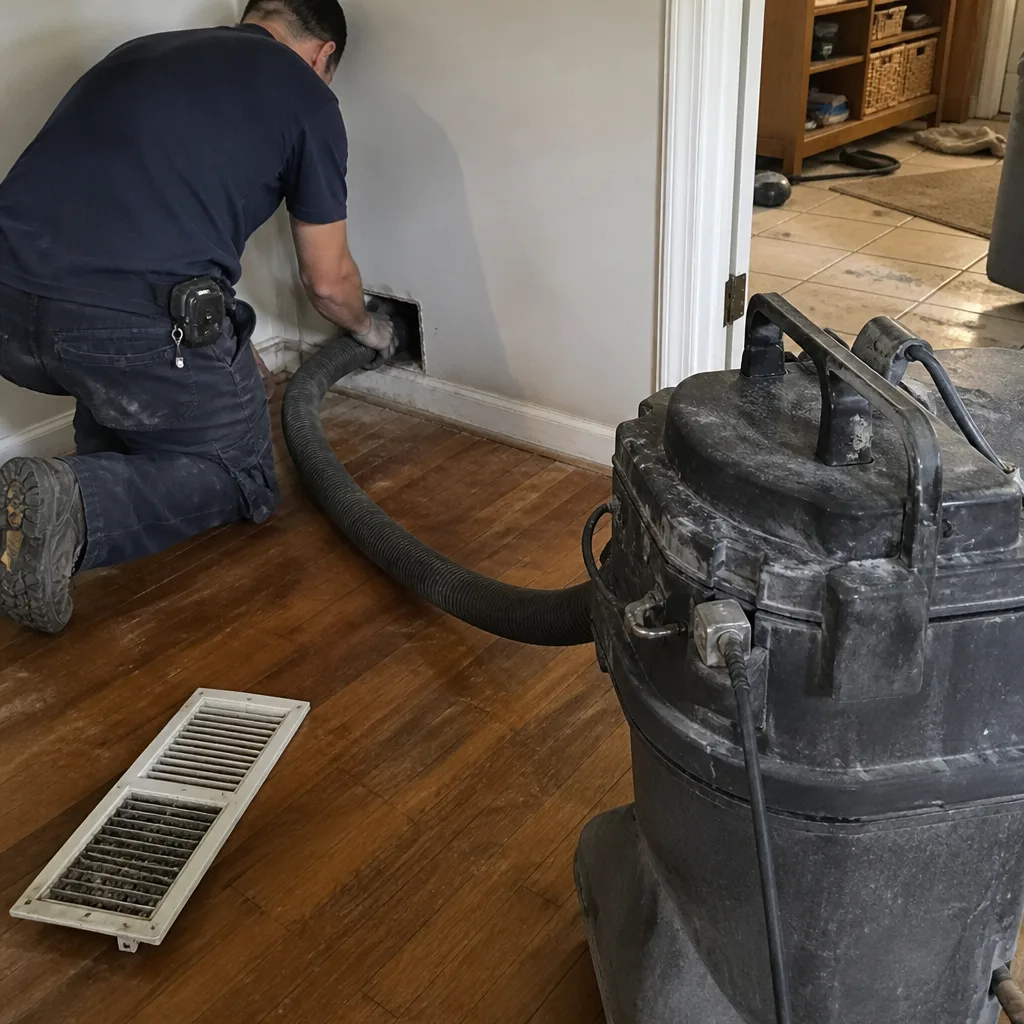 Before
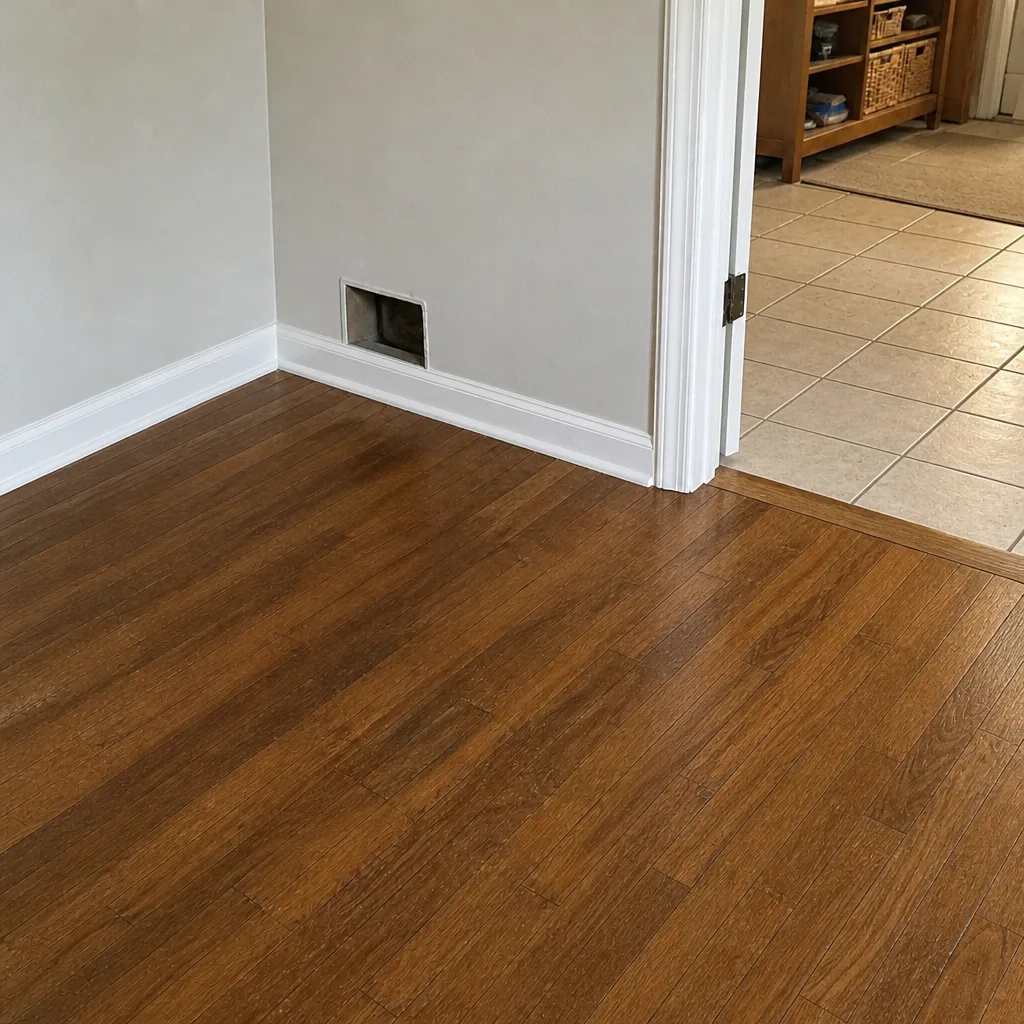 After
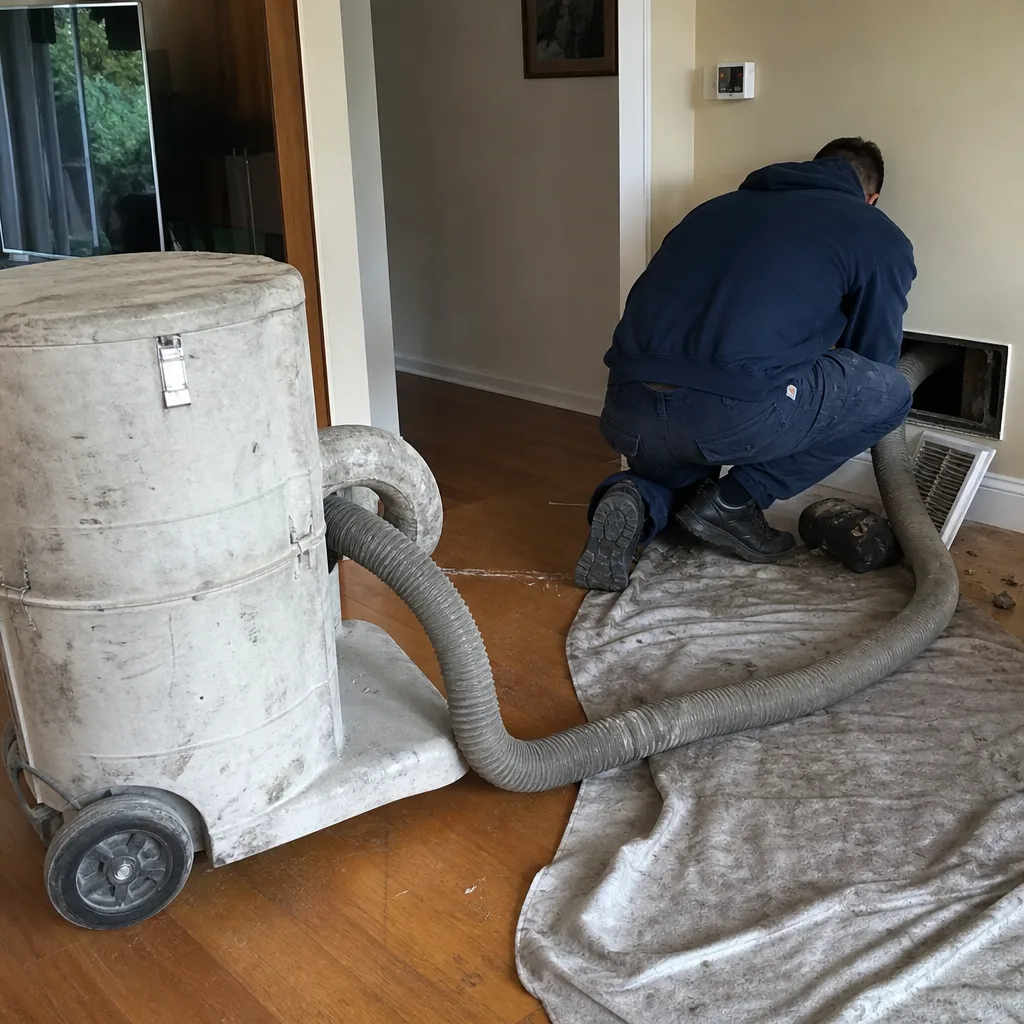 Before
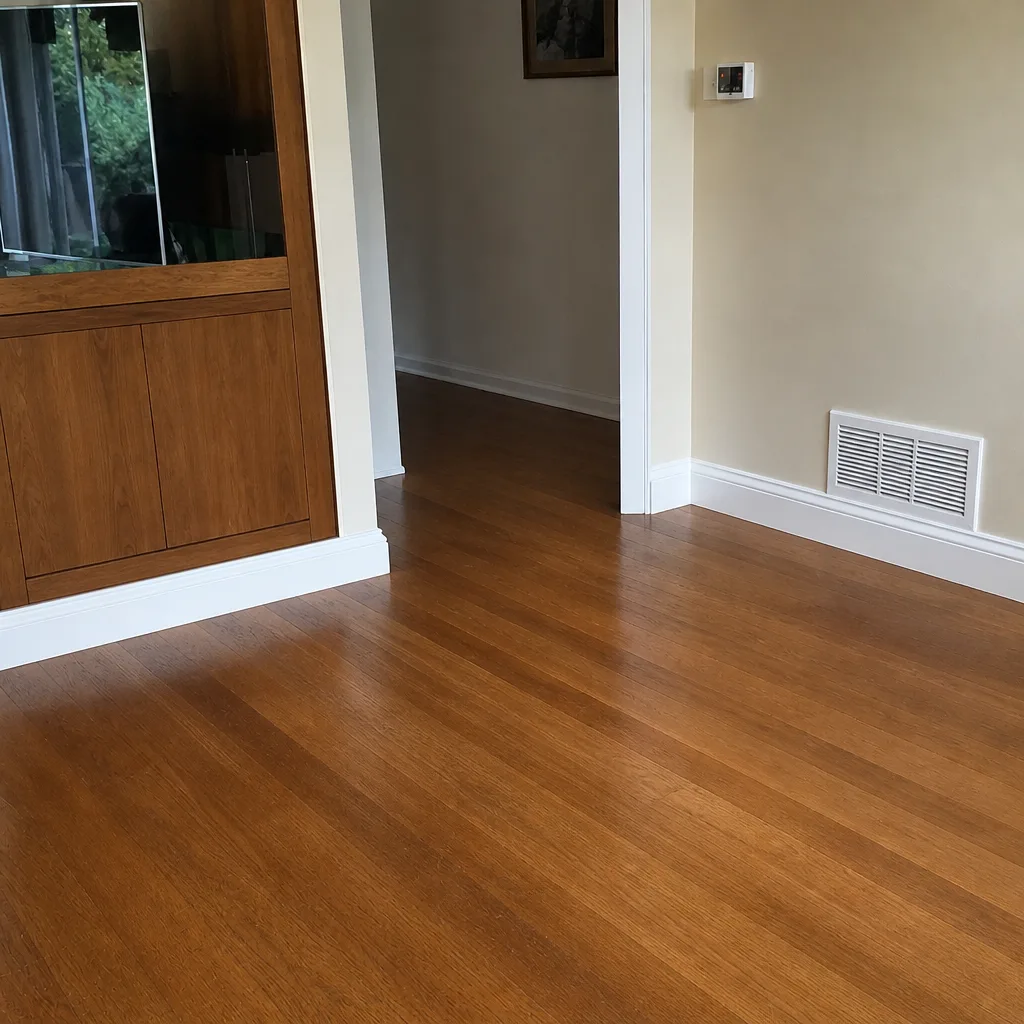 After
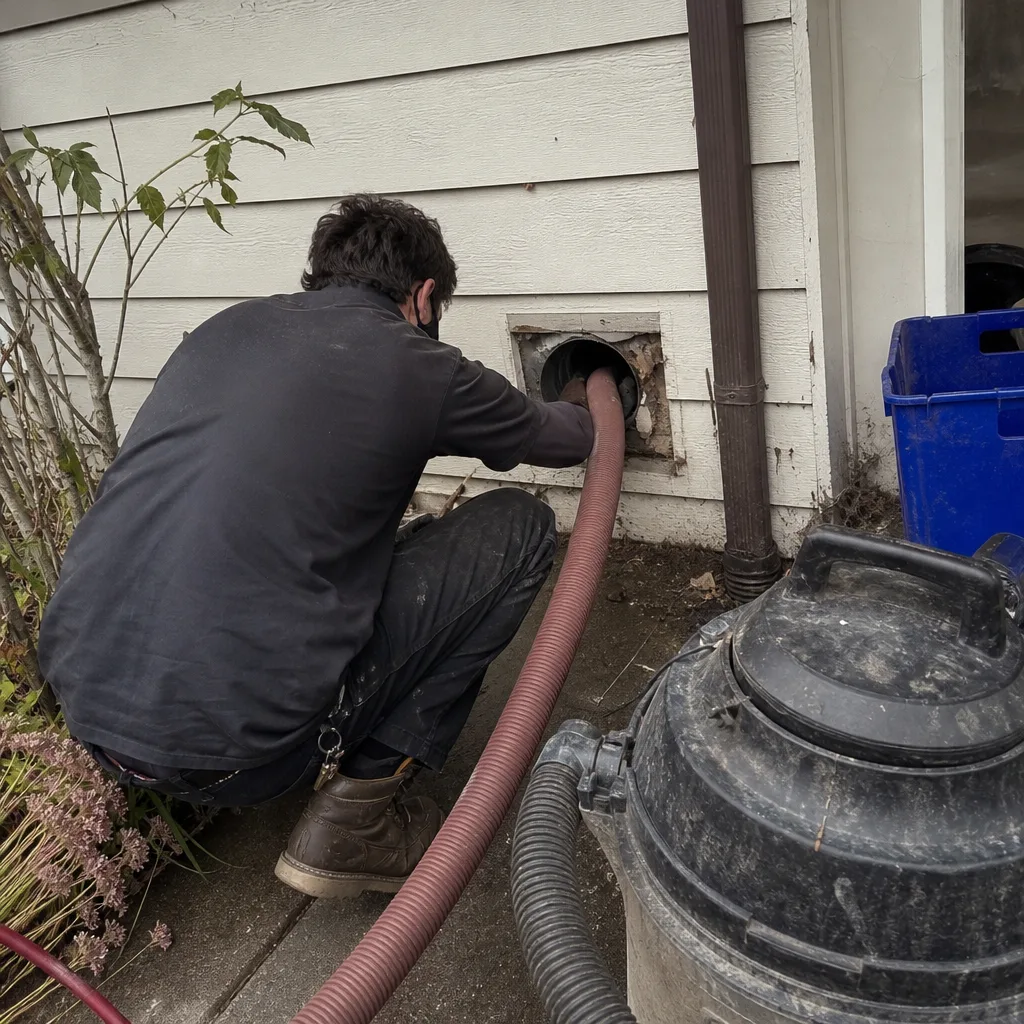 Before
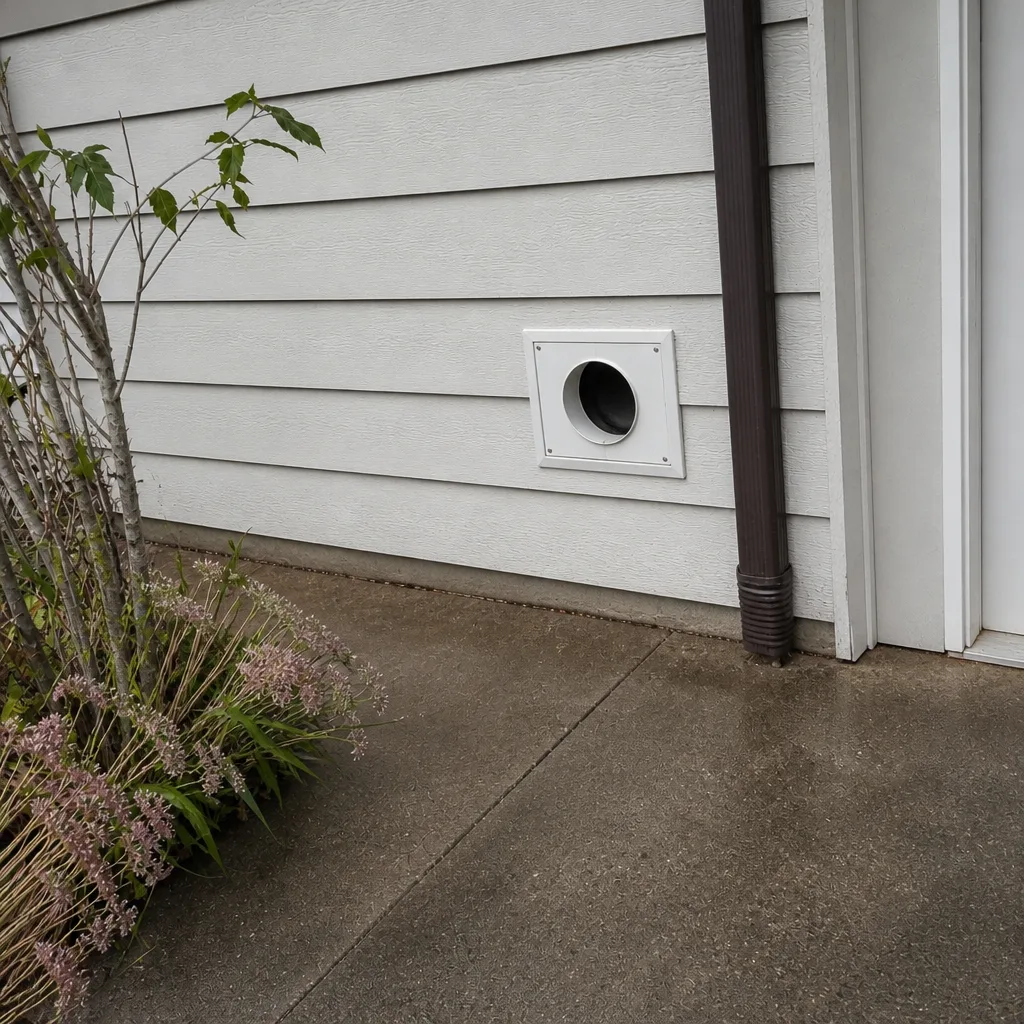 After
When to Call a Professional
Call a professional duct service in these situations: after any fire that touched the HVAC system, after water intrusion that reached ductwork or the air handler, after a sewage backup near registers or equipment, after an extended wildfire smoke event when odor or residue persists, or any time mold is visible at a register or inside a duct. Call if the system smells musty after a storm, if you see condensation inside the ducts, or if your ductwork includes porous materials that got wet and have not been replaced. Also call if you’re simply unsure whether a small water event reached the system; a professional inspection is a fast way to rule out a bigger problem. Edmonds Air Duct Cleaning Pros offers free estimates in Edmonds – call (866) 883-0691. We answer 24/7. Fast dispatch from 7am to 7pm, Sunday through Friday.
Frequently Asked Questions
Emergency-related duct cleaning is priced per system, not per vent, and the range depends on the contamination category and how many duct components need replacement. You’ll get a written estimate before any work starts, and the written estimate sets the final price. Call (866) 883-0691 for a free exact quote.
If the system ran after a fire, it almost certainly did. Soot residue shows up as darkening at returns and registers, soot on the evaporator coil, and a persistent smoke odor that comes back when the system runs after cleaning. Call us for a scoping inspection and we’ll tell you what’s actually there.
Bare galvanized metal is often salvageable if dried within 48 to 72 hours and cleaned and sanitized, while internally lined duct, flex duct and duct board that sat in water usually need replacement. Our technicians have up to 12 years of experience making that call on-site, and we’ll show you the materials before recommending replacement over cleaning.
Standard cleaning is source removal of typical dust and debris. Restoration-grade cleaning begins with a contamination assessment and includes negative-pressure containment, HEPA filtration and antimicrobial treatment where the contamination category calls for it, with documentation at closeout. We bring Abatement Technologies equipment for the restoration-level scenarios.
As soon as the outdoor air clears, if you noticed persistent odor or residue inside the home or allergy symptoms that flared with airflow. If the event was brief and filters look clean, enhanced filtration alone may be enough. Call for an assessment and we’ll tell you honestly whether cleaning is warranted.
Photograph the air handler nameplate with model and serial numbers, every supply and return register with the room it serves, all accessible duct runs and their material types, and your filter with a date stamp. Store those photos in cloud storage and note any retrofits, so an insurance claim and contractor scope are faster and more accurate.
The Bottom Line
Different emergencies hit your ductwork in different ways, and the right response starts with identifying the contamination category before anyone touches a vacuum or restarts the system. Fire calls for a full HVAC lockout and restoration-grade residue removal. Water calls for action inside the 48 to 72 hour mold window. Smoke calls for understanding that standard filters let sub-micron particles through. Sewage calls for EPA-registered antimicrobial treatment and documented work. And every one of those scenarios gets easier when you already have photos and a baseline. For a free estimate anywhere in Edmonds, call (866) 883-0691. We answer 24/7, with fast dispatch from 7am to 7pm, Sunday through Friday. When you need a full-scope assessment on your HVAC cleaning and duct system, we’re ready to scope it, and our dryer vent cleaning service covers the fire-risk side of the same home. You can reach our full team through Edmonds Air Duct Cleaning Pros for scheduling.
Written by the team at Edmonds Air Duct Cleaning Pros.